From classroom creativity to careers in technology, EU Code Week joined educators, industry experts and policymakers at Digital Talent EU Days 2026 in Dublin to explore how Europe can develop a more inclusive digital future.
On 15–16 October 2026, Digital Talent EU Days brought together educators, industry leaders, policymakers and digital skills advocates at Trinity Business School in Dublin to explore one of Europe’s most important challenges: how to develop the digital talent needed for the future.
EU Code Week was represented throughout the event, contributing to discussions on digital education, inclusion and career opportunities, while also bringing digital creativity directly to a group of young learners.
From a hands-on UX/UI design workshop with primary school pupils to conversations about women in technology and the skills needed for an AI-driven future, the event highlighted the importance of making digital education accessible, engaging and relevant to everyone.
Introducing young learners to the world of digital design
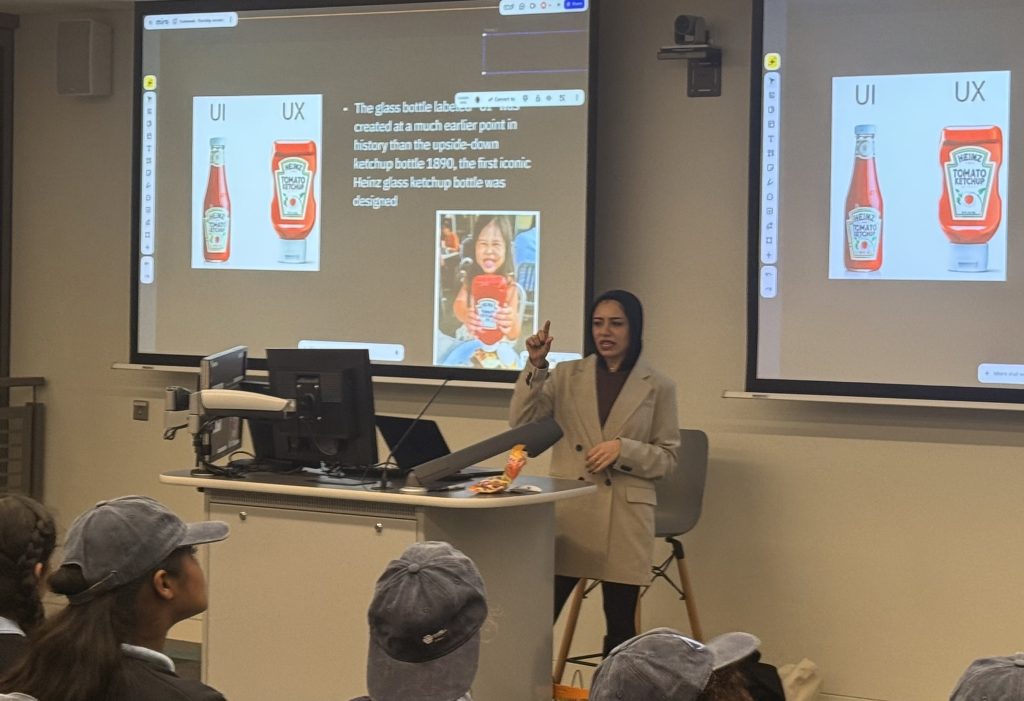
One of the highlights of EU Code Week’s participation was a special workshop for pupils from Mary, Mother of Hope Junior National School, accompanied by their teacher, Ms Clerkin. Hosted at Trinity Business School, the session introduced the children to user experience (UX) and user interface (UI) design, showing them how the websites, apps and digital services they encounter every day are created.
The interactive workshop was led by Zahra Alboqub, a UX Designer and Researcher at Matrix Internet, an award-winning Irish digital agency specialising in web development, user experience design and digital marketing.
Rather than focusing solely on the technical side of digital technology, Zahra encouraged the children to think about design from the perspective of the people using it.
What makes a great digital experience?
- What makes an app easy to navigate?
- Why are certain buttons placed in particular locations?
- How can designers make digital experiences simpler and more accessible?
These are the kinds of questions that UX designers consider every day, and they provided an engaging introduction to the relationship between creativity, technology and problem-solving.
The workshop was supported by Sabrina Di Ruggiero from Schuman Associates and Jeff Sheridan from Matrix Internet, while the Trinity AI XR Hub team added another dimension to the visit with a session exploring digital technology.
Together, the activities gave the pupils an opportunity to experience different aspects of the digital world and discover that technology is something they can help shape, rather than simply use.
From fine art to UX design: A different pathway into technology
An especially interesting part of the workshop was the pupils’ curiosity about Zahra’s own career journey.
While the session introduced the children to digital design, they were also keen to understand how Zahra had come to work in technology, and whether her career had always followed that path.
There is no single route into a digital career, and creativity can be just as valuable as technical expertise.
Zahra’s professional journey began with a passion for fine art and creative expression. Like many young people interested in the arts, she initially faced questions about how to turn that passion into a fulfilling career.
She moved into graphic design, working with visual communication, print and branding. However, she became increasingly interested in finding a stronger connection between design decisions and their impact on people.
The turning point: Designing for people
A turning point came while working on an app for a Dublin-based startup. Questions about why buttons were positioned in certain places, how users would navigate the application and what made one design approach more effective than another encouraged her to look beyond aesthetics. She discovered that digital design could combine creative thinking with research, evidence and an understanding of human behaviour. This led her towards user experience design, a field focused on understanding people’s needs and creating digital products that are intuitive, accessible and useful.
Determined to develop her expertise, Zahra moved to London to complete an MSc in User Experience Design, expanding her knowledge of user research, usability testing and interaction design.
Today, she applies those skills at Matrix Internet, helping organisations create digital experiences informed by evidence, accessibility and the needs of real users. Her journey demonstrated to the pupils that a career in technology does not necessarily begin with coding or follow a straight line from school to university to employment.
Art, design, psychology, communication, research and analytical thinking all have important roles to play in creating technology that works for people. For young learners beginning to explore their interests and abilities, this is a particularly valuable lesson.
The next generation of digital innovators will need creative thinkers and problem-solvers, as well as programmers and engineers.
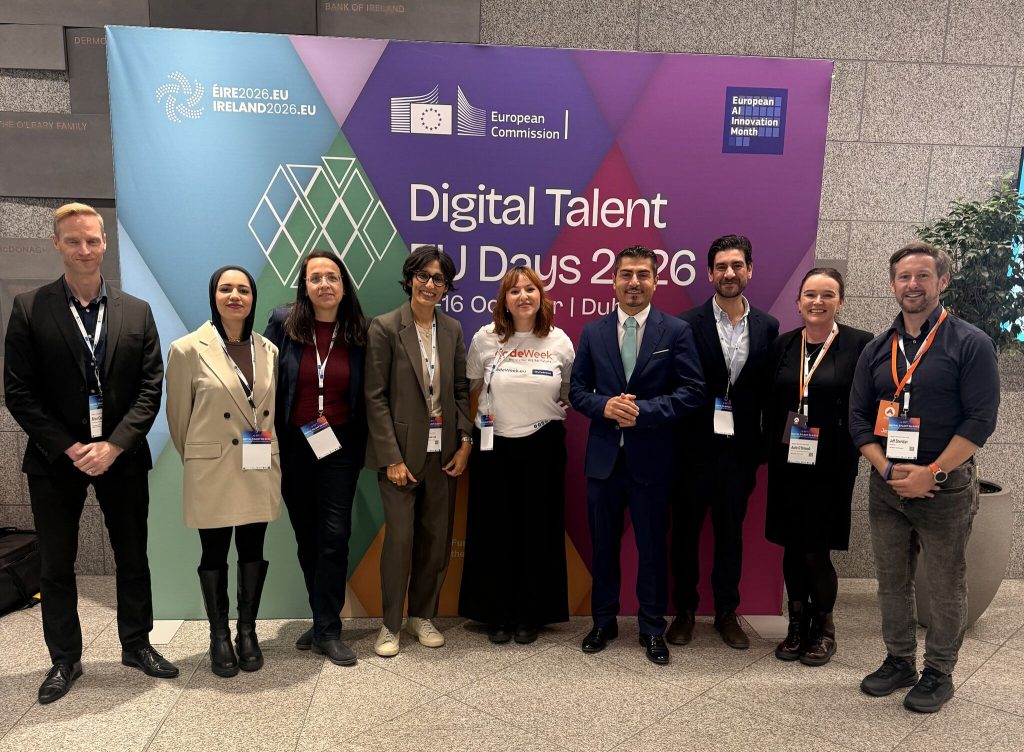
Rehana Schwinninger-Ladak, Deputy Director for Data and Head of Interactive Technologies, Digital for Culture and Education at the European Commission with Code4Europe consortium partners from Schuman Associates, Matrix Internet and JA Europe
Women in digital: Creating more inclusive pathways
The importance of encouraging diverse pathways into technology was also reflected in the wider conference programme.
On 15 October, Marisa Abela Gatt, Project Specialist at the Malta Digital Innovation Authority (MDIA) and a contributor to EU Code Week, participated in the session Women in Digital: Evidence for Member State Policies. The discussion examined the continuing underrepresentation of women in ICT education, digital occupations and leadership positions across Europe.
It addressed challenges along the digital talent pathway, from participation in STEM education and progression into higher education to entering technology careers, remaining in the sector and advancing into leadership roles.
Bringing together perspectives from different European countries, the session explored how targeted initiatives and evidence-informed policies can help improve participation and create more inclusive opportunities.
Marisa’s contribution reflected MDIA’s involvement in European digital skills initiatives and its commitment to supporting digital learning, innovation and technology adoption.
The discussion also reinforced the importance of initiatives such as EU Code Week, which introduce digital skills at an early age and encourage young people from different backgrounds to discover their potential.
Creating a more inclusive digital workforce begins long before someone applies for their first job in technology. It begins with opportunities to explore, experiment and imagine what might be possible.
For girls in particular, access to engaging activities, supportive learning environments and visible role models can help challenge assumptions about who belongs in technology.
Developing the skills to lead in an AI-driven world
Artificial intelligence and the growing demand for digital skills were also central themes throughout Digital Talent EU Days.
Among the speakers was Salvatore Nigro, CEO of JA Europe, a key partner in the EU Code Week initiative. Salvatore delivered a keynote session titled Leading Teams That Build Big – Lessons for Delivering AI at Scale Globally. The session brought the theme of leadership into the wider conversation about artificial intelligence and digital transformation.
As AI continues to change how organisations operate, the skills required to participate in the digital economy extend beyond technical knowledge alone. Creativity, adaptability, teamwork, critical thinking and the ability to solve unfamiliar problems are increasingly important alongside coding and AI literacy.
For EU Code Week, these themes reinforce the value of helping young people develop digital confidence from an early age and supporting educators in introducing emerging technologies in accessible and meaningful ways.
Digital education is not only about preparing students for particular jobs. It is about equipping them with the curiosity, understanding and confidence to navigate a changing world and shape its future.
Connecting education, industry and policy
Beyond the individual sessions and school activities, Digital Talent EU Days provided an opportunity for members of the Code4Europe consortium and wider EU Code Week community to connect with organisations working across education, technology, employment and digital policy.
Representatives from JA Europe, Schuman Associates, the National College of Ireland, Matrix Internet and the Malta Digital Innovation Authority were among those participating.
These exchanges reflected the collaborative approach at the heart of EU Code Week.
Improving digital skills across Europe requires more than individual training programmes or classroom activities. It depends on cooperation between educators, businesses, public institutions and organisations working to make digital opportunities more widely accessible.
By connecting practical learning experiences with conversations about digital workforce development, the event demonstrated how initiatives at different levels can contribute to a shared ambition: helping more people develop the skills and confidence to participate in Europe’s digital future.
Inspiring digital creators, not just technology users
For EU Code Week, one of the most meaningful outcomes of the event was seeing young learners engage with technology through curiosity and creativity.
The questions asked during Zahra’s workshop, including those about her unconventional career path, were a reminder that introducing children to digital skills is about much more than teaching them to use particular tools.
It is about showing them the range of possibilities available, helping them recognise their own strengths and encouraging them to see themselves as future creators, designers, researchers and innovators.
The conversations taking place elsewhere at Digital Talent EU Days, from improving women’s participation in technology to leading AI-driven change, highlighted why this early engagement matters.
The digital future needs people with different experiences, perspectives and abilities. Creating opportunities for young people to discover and develop those abilities is essential.
EU Code Week would like to thank Trinity Business School, the Trinity AI XR Hub team, Mary, Mother of Hope Junior National School and Ms Clerkin, as well as Zahra Alboqub, Sabrina Di Ruggiero, Jeff Sheridan and everyone who contributed to the activities and discussions.
Most importantly, thank you to the pupils whose enthusiasm, creativity and thoughtful questions made the workshop such a memorable experience.
Continue the journey with EU Code Week
Although EU Code Week 2026 has concluded, the opportunities to explore coding, digital creativity and emerging technologies continue throughout the year.
Whether you are a teacher introducing digital skills in the classroom, a parent encouraging curiosity at home or an organisation looking to inspire future talent, EU Code Week offers resources and activities to help you get started.
Because Europe’s digital future begins with inspiring the next generation to imagine what they can create.
