


EU Code Week
Home
Girls in Digital

We’re excited to announce Girls in Digital Week 2026! Empower, inspire and celebrate the next generation of girls and young Europeans!

About Girls in Digital

Get ready to celebrate Girls in Digital Week from 23–27 March 2026, as we put a spotlight on inclusion, innovation, and the limitless opportunities digital skills offer to all!

Girls in Digital encourages communities to get involved in meaningful ways. Through Girls Code It Better (GCIB) Sprints, educators and organisations can offer hands-on learning experiences where girls collaborate, build confidence, and solve real-world challenges using digital tools. The Female Role Model Database connects young people with women and gender-diverse professionals in STE(A)M, sharing stories and guidance that support their digital journeys. Together, these initiatives help turn curiosity into confidence and ideas into possibility.

Resources

Are you a young person or parent?

You are a young person curious about technology, coding, or digital creativity; search for activities near you or connect with a role model through the Female Role Model Database. You are a parent seeking safe, inclusive digital activities; find opportunities nearby and explore the Female Role Model Database for inspiring role models.

Are you an educator?

You are an educator looking to organise an activity to empower youth with digital skills in a safe and inclusive environment, where all feel welcomed to explore the endless opportunities that digital has to offer. Check our resources below for guidance and support in bringing your activity to life.

Why Girls in Digital Matters

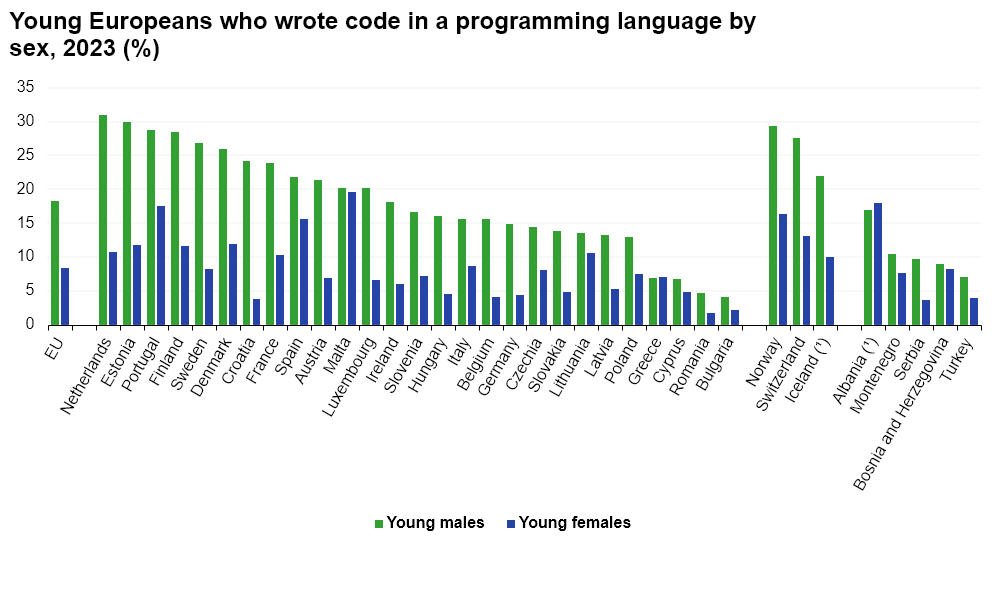
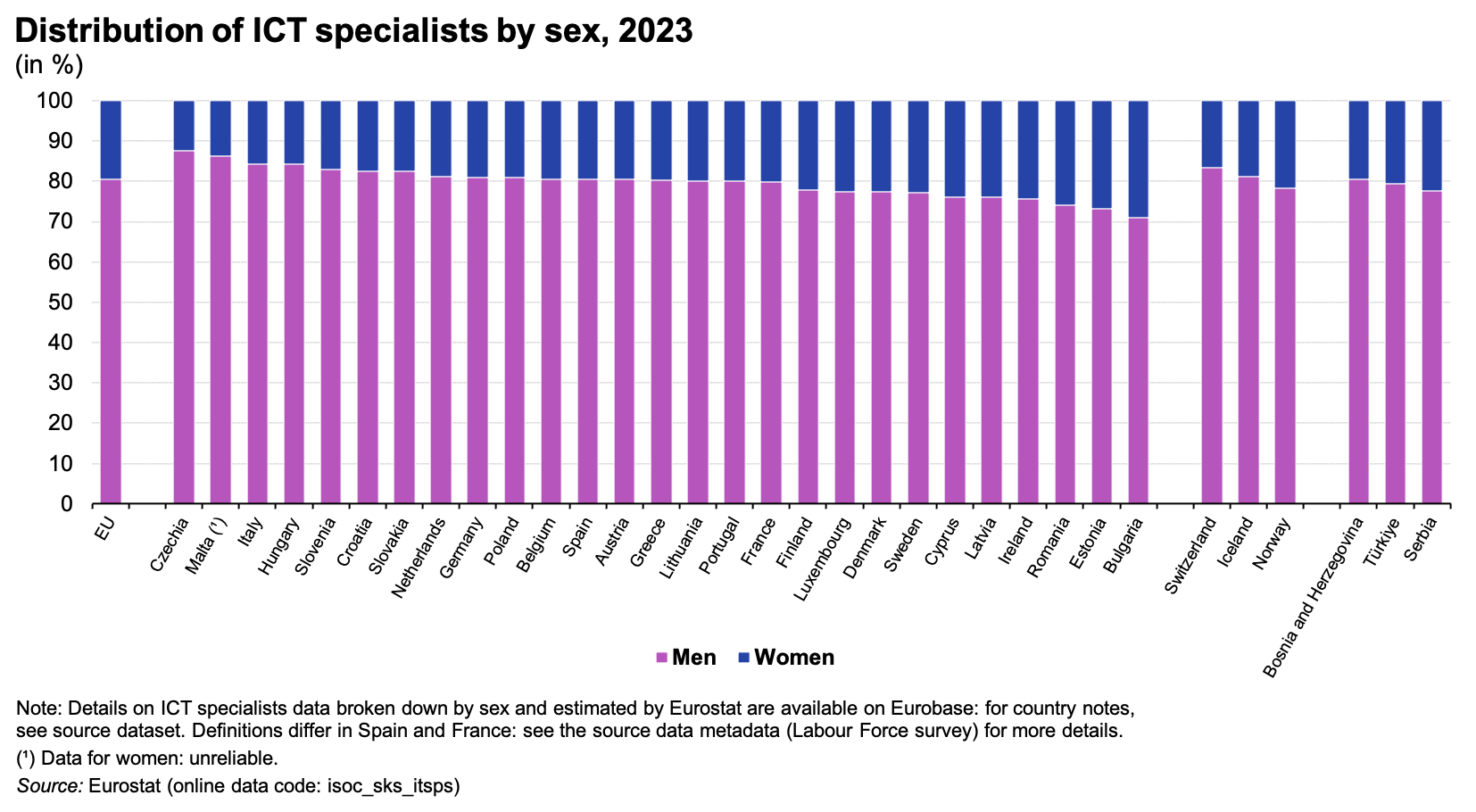
Young people – digital world. Eurostat 2023 ICT specialists in employment. Eurostat 2023

The graphs illustrate the persistent gender gap in ICT across different stages of a young European’s journey, from education to professional life. While female representation has gradually increased between 2013 and 2023, the sector remains male-dominated, highlighting the need for further progress in closing the gap.

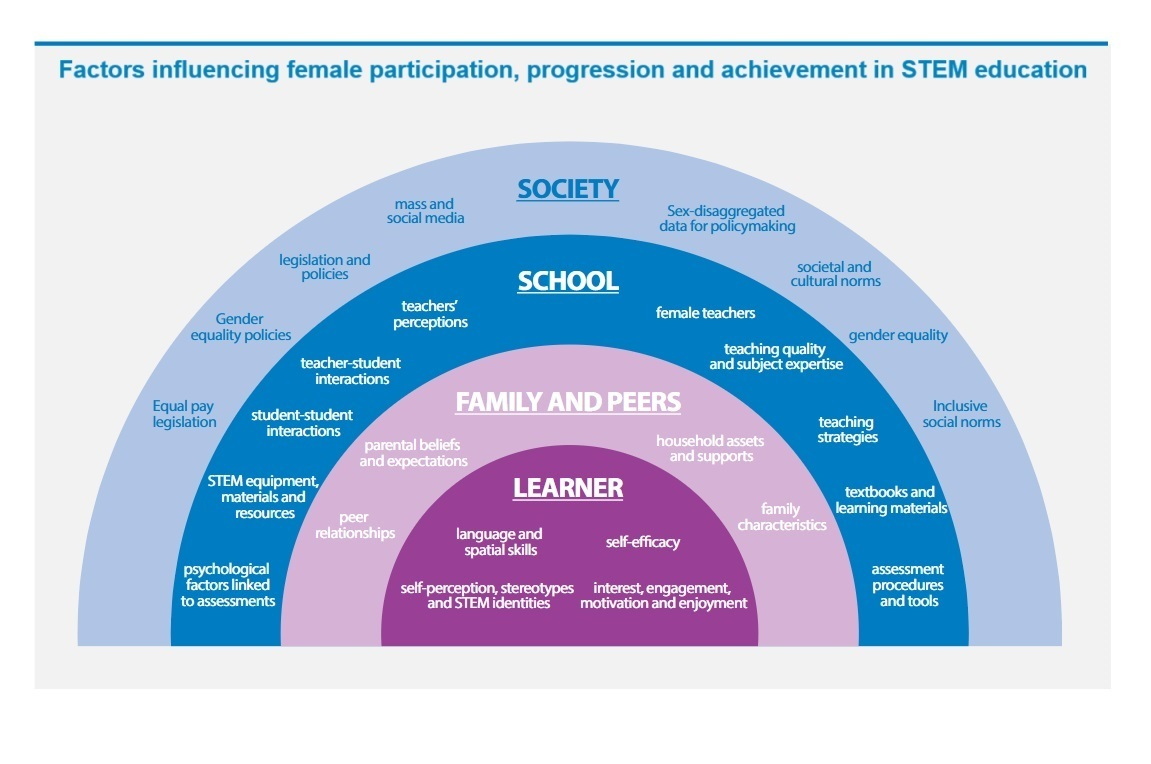
Cracking the code: Girls’ and women’s education in science, technology, engineering and mathematics (STEM). United Nations Educational, Scientific and Cultural Organization (UNESCO), 2017.

Multiple interconnected factors influence girls' and women's participation, achievement, and progression in STEM, with individual beliefs shaped by family, peers, education, and broader societal influences. This diagram illustrates the various factors at different levels influencing female representation in STEM. Addressing these factors holistically has been shown to positively impact confidence and motivation, encouraging more girls and women to pursue STEM education and careers.

FAQ’s

What is Girls in Digital?

Girls in Digital (GiD) is an EU Code Week initiative aimed at empowering girls and young women to explore and excel in digital skills, STE(A)M fields, and technology-driven careers while fostering gender equality.

Who can participate in Girls in Digital activities?

The initiative is inclusive of all genders, but its primary focus is on encouraging and empowering girls and young women. Activities can be tailored for girls-only groups or mixed-gender settings.

Why does Girls in Digital focus on girls?

Girls are underrepresented in digital fields, STE(A)M careers, and ICT studies. GiD aims to bridge these gaps and inspire a new generation of women in technology by breaking down gender stereotypes and promoting equality. A more gender-balanced workforce in these fields will not only foster innovation but also contribute to building a better, more inclusive future.

Who can participate in Girls in Digital activities?

The initiative is inclusive of all genders, but its primary focus is on encouraging and empowering girls and young women. Activities can be tailored for girls-only groups or mixed-gender settings.

What is a Girls Code it Better (GCIB) Sprint?

GCIB Sprint blogpost is a short, 3–4-hour hands-on learning experience where girls collaborate to tackle real-world challenges using digital tools. It encourages participants to explore the creative potential of technology while strengthening problem-solving, teamwork, and digital skills in a supportive and inclusive environment.
GCIB Sprints can be organised both online and in person, making them flexible and accessible for different settings and audiences.

How can I organise a Girls in Digital activity?

You can use the Girls Code it Better Sprint Replication Kit and supporting materials, which provide step-by-step instructions, resources, and tips to plan and execute an engaging Sprint tailored to your group’s needs. You will need a device for each participant, a stable internet connection and a physical or virtual space.

Can I organise a GCIB Sprint in a mixed classroom?

Yes, you definitely can! The primary target group of the GCIB initiative is girls aged 11–19. However, we recognise that organising girls-only activities may not always be possible. In such cases, GCIB Sprints can also be organised in mixed classrooms, as long as girls make up approximately 75–80% of the participants.

Do I need prior experience in digital skills to organise an activity?

No, the guidelines are designed to be accessible for everyone, regardless of their expertise. They include examples, templates, and resources to help you get started.

Do I need prior experience in digital skills to organise a GCIB Sprint?

A GCIB Sprint requires two coaches—one of the two coaches must have strong skills in the chosen technological area, and the second coach must have skills in the educational field with the age group of the participating girls.

Are there any funding opportunities for Girls in Digital events?

This depends on your region and local resources. Check with your national or regional hubs or reach out to partners affiliated with the initiative. Find the list of EU Code Week national and regional hubs HERE.

What is the Female Role Model Database and who is it for?

The Female Role Model Database is a collection of inspiring European women and gender-diverse professionals working in STE(A)M. It is designed for young people, parents, educators, and anyone curious about STE(A)M careers. The database helps users discover real role models, learn about different career paths, and feel more confident exploring opportunities in science, technology, engineering, arts, and mathematics.

How can I search for and choose a role model that matches my interests or career goals in STE(A)M?

You can browse the database using filters such as STE(A)M field and professional title. Each profile shares the role model’s background, what they work on, and the topics they are happy to discuss. This makes it easy to find someone who matches your interests or future goals.

How can I contact a role model and what can I ask them?

Each role model profile includes links to their preferred social media or professional platforms enabling you to get in contact with them. You can reach out to ask questions about studies, careers, skills to learn, or challenges they’ve faced. Please be polite, clear, and respectful when contacting role models, as they are volunteering their time to support others.

How can I become a role model and be included in the Female Role Model Database?

If you would like to join the Female Role Models Database as a role model, you can register by filling out the Questionnaire available on the Female Role Models page. The questionnaire takes around 5–10 minutes to complete and helps us understand your background, areas of expertise, and how you would like to support others. Once submitted, your profile will be reviewed before being added to the database.

What is the long-term goal of the initiative?

Our long-term goal is to foster equality in STE(A)M, as a more gender-balanced workforce drives innovation, brings diverse perspectives, and creates a more inclusive environment. When everyone has equal opportunities to contribute, we unlock new ideas, fuel creativity, and develop stronger, more equitable solutions for the future. By breaking down barriers and encouraging diverse talent, we not only shape a fairer industry but also ensure that STE(A)M continues to thrive with fresh insights and groundbreaking advancements—paving the way for a future where everyone has equal access to opportunities in digital and STE(A)M fields.