How students learn to think like programmers through play
15/06/26
At a primary school in Strumica, North Macedonia, Verica Guncheva is introducing her young students – aged around 7 to 8 – to coding, not through screens or complex tools, but through movement, play, and imagination.
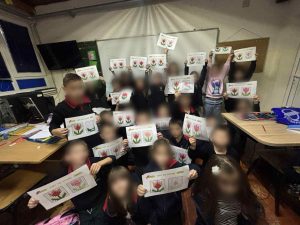
During Code Week, her classroom became a space for experimentation, where coding concepts were explored through activities like “Bouquet for Mom”, “I Am a Robot”, and “Coding Around the Home”. What started as simple exercises quickly evolved into something more dynamic.
“I had the opportunity to participate in several activities and projects during Code Week, as well as other integrated classroom activities. Each new activity became increasingly interesting and engaging for the students,” Verica told us.
As the activities progressed, so did the students. What initially required guidance began to come more naturally, with noticeable changes in how they approached tasks.
“Over time, students showed greater confidence, curiosity, and independence. The second time around, they approached the tasks more confidently, understood the instructions more quickly, and were more eager to participate,” Verica said.
When instructions matter
One of the most meaningful moments came from an activity that required students to step into the role of a machine.
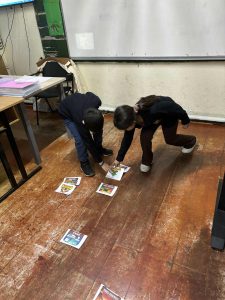
During “I Am a Robot”, students gave instructions to a “robot”, testing how clearly they could communicate actions. It was here that a key realisation emerged – not because it was taught directly, but because it was experienced.
“One small but very meaningful moment that stayed with me was when students realised on their own that the ‘robot’ makes mistakes if the instructions are not clear,” Verica shared.
That moment captured something fundamental about coding – the importance of clarity and logic – in a way that was both simple and memorable.
“That moment of understanding, when they grasped the importance of giving precise instructions, was truly special,” the teacher said.
Discovering they can “program”
For the students, the biggest takeaway was not just what they learned, but what they were capable of doing.
“If you asked my students, they would probably say that the ‘coolest’ thing they learned was that they can ‘program’ – in other words, give instructions and control actions just like real programmers,” Verica said.
This sense of agency was reinforced through the way the activities were designed – combining creativity with physical interaction, rather than relying solely on digital tools.
“They especially enjoyed learning through play, movement, and creativity, while discovering how robots and computers work.”
A lasting impact
While Code Week provided the framework, its impact extended beyond a single week of activities.
“Code Week was a wonderful experience that brought a lot of joy, learning, and motivation to my students. For me as a teacher, it was also a great source of inspiration for future work,” Verica said.
In a classroom where coding is introduced through curiosity and experimentation, the results go beyond technical skills.
Students begin to think differently – more logically and confidently – and, perhaps most importantly, they begin to see themselves as capable of shaping the world around them.
