
Quantum Computing in Schools: Practical Teaching Materials for STEM Education
06/07/26
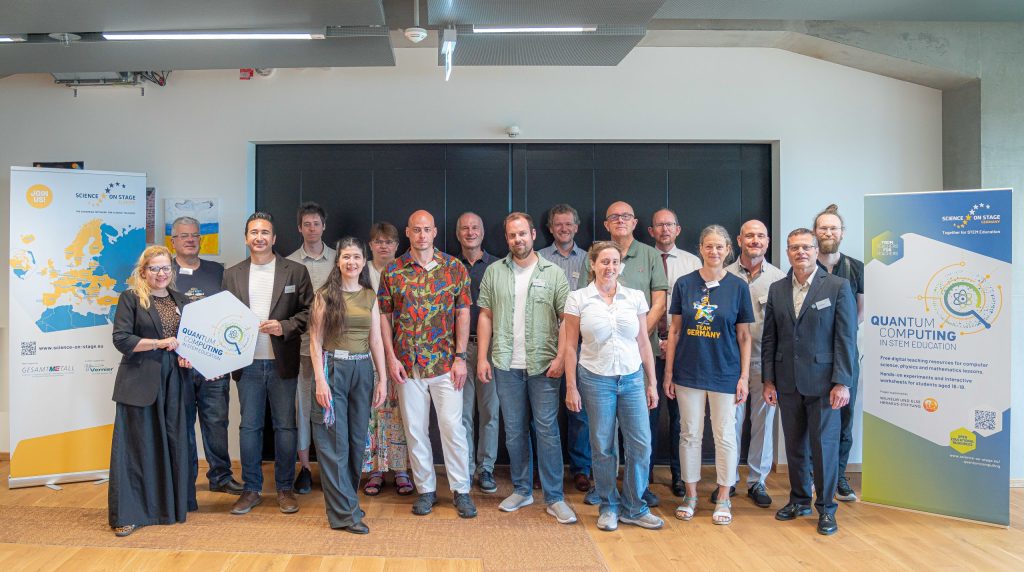
How can a complex topic like quantum computing fit into everyday classroom teaching? For many teachers, this is no longer a theoretical question. Quantum technologies now appear regularly in public discussion. As a result, students meet the topic long before they grasp the underlying concepts.
New materials built by teachers, for teachers
To support educators, Science on Stage Germany has developed new teaching materials on “Quantum Computing in STEM Education.” European partners contributed to the project. In addition, the Wilhelm and Else Heraeus Foundation provided the support that made the materials possible.
Teachers designed these resources for the classroom. Therefore, they slot directly into secondary school physics, mathematics, and computer science lessons. They introduce key ideas such as superposition and simple quantum algorithms. Best of all, the structured activities require no prior specialist knowledge. For example, probabilistic experiments and visual models help students approach abstract ideas step by step. Students then transfer those ideas to quantum systems.
Usability comes first
Classroom usability sits at the heart of the project. The teaching units follow a clear structure, include hands-on tasks, and adapt to different levels. As a result, teachers can fold the topic into existing lessons. Moreover, they avoid extensive extra preparation.
At the same time, students build skills that go beyond content knowledge. They analyse problems, discuss technological developments, and collaborate on solutions. In this way, quantum computing becomes more than a subject topic. It also becomes a context for developing key competences.
A keynote launch in Berlin
The materials were recently presented in Berlin. The event opened with a keynote by Dr Heike Riel — IBM Fellow, Head of the Science of Quantum and Information Technology Division at IBM Research, and President of the German Physical Society. From a research and industry perspective, she underlined the growing importance of quantum computing for future technology. She also stressed the need to address the topic in schools through practical approaches.
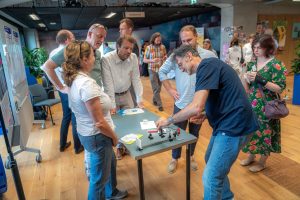
During the event, teachers tried out selected units in hands-on workshops. Experiencing the activities as learners showed how abstract concepts can be introduced step by step. It also showed how they adapt to different classroom contexts.
Sharing ideas in the months ahead
This practical approach lies at the core of the Science on Stage model: teachers develop, test, and share teaching ideas. In the coming months, trainings and activities will spread the materials further. In turn, this support helps teachers bring quantum computing into their lessons in a way that is both accessible and relevant.
Explore the new teaching materials: Quantum Computing in STEM Education
The materials in German: Quantencomputing
