Stronger Together: Two Years of Community Connection and Growth
02/09/26
Community growth is not a straight line.
People join, take on new responsibilities, share their experience, move into different roles and, sometimes, need time to step back and recharge. This is especially true for a grassroots initiative like EU Code Week, where so much depends on the energy and commitment of volunteers.
Over the past two years, the EU Code Week community has grown significantly. But the most important story is not simply that more people have joined. It is how that growth has happened: through listening, meeting, collaborating, creating opportunities and building a community that can support both its members and the initiative over the long term.
Starting by listening
In late 2024, we developed a new community engagement strategy with the active participation of the community.
The strategy was informed by community conversations, contributions and feedback. Its purpose was not to decide for the community what engagement should look like but to understand what members needed and use those needs to guide the way forward.
The first semester of 2025 was therefore dedicated largely to strengthening connections. We consolidated contacts, renewed engagement, and created more regular opportunities for Ambassadors, Leading Teachers, Edu Coordinators, National & Regional Hubs and the project team managing EU Code Week to meet and exchange ideas.
This work may not always be immediately visible on a map or in a membership total. However, it helped create foundations on which the community’s later growth could be built.
Creating spaces to meet
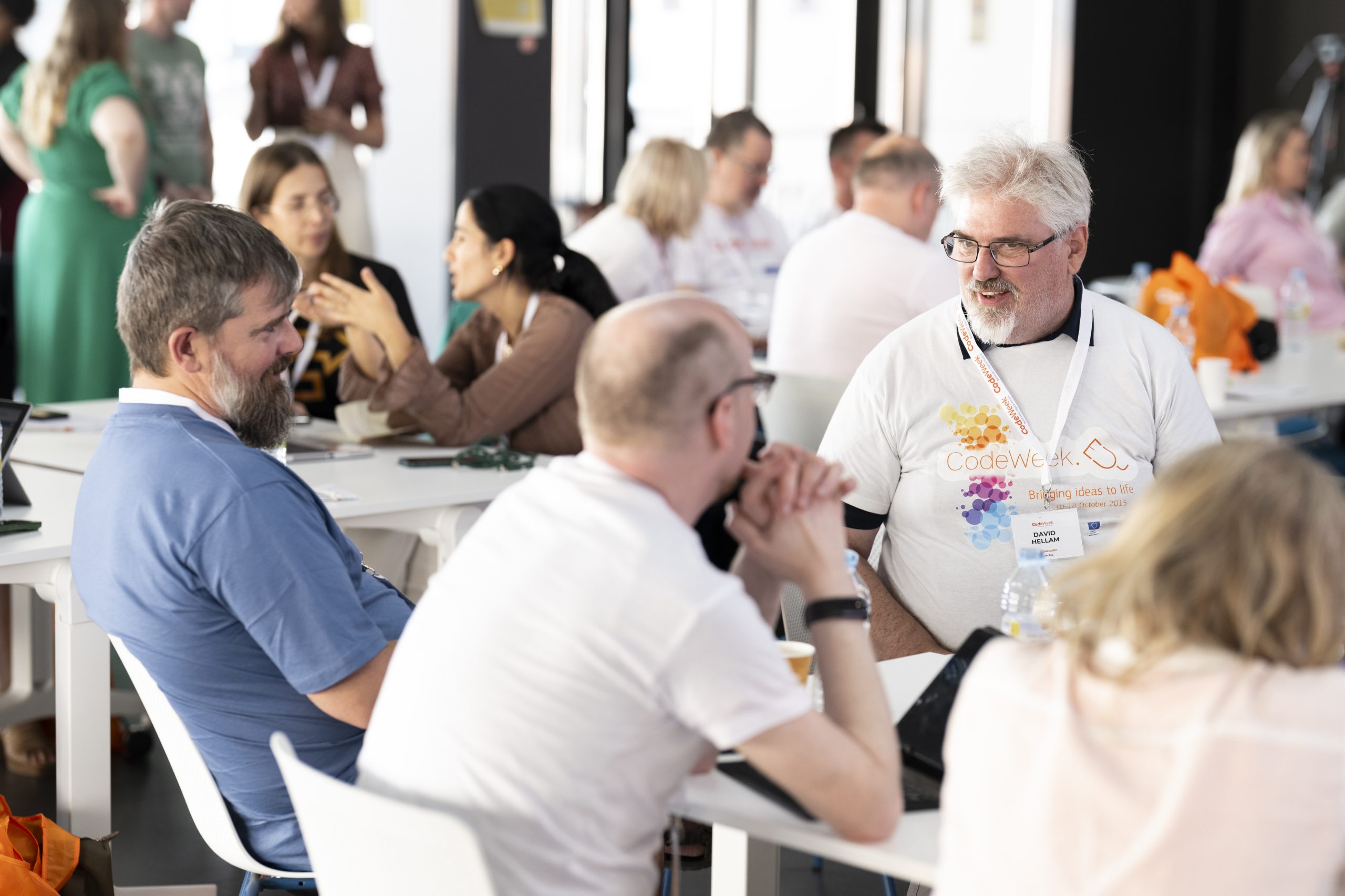
At the time of writing, in two years, we have organised 19 online community meetings, including three meetings dedicated specifically to Edu Coordinators and the needs, opportunities and perspectives of ministries and education authorities.
These meetings have served different purposes. Some created space for feedback and honest conversations about the challenges and opportunities facing EU Code Week. Others invited community members to showcase their work, share expertise and present inspiring initiatives from their countries.
We heard stories about robotics projects, hackathons, teacher trainings, creative coding, artificial intelligence, international partnerships and activities reaching learners in many different educational settings.
Some meetings focused specifically on strengthening international collaboration. Others used an open-space format, allowing participants to suggest the topics they wanted to discuss and gather around the conversations most relevant to them.
The aim was not simply to hold more meetings. It was to create different ways for people to participate, contribute and learn from one another.
Bringing the community together in person
Face-to-face meetings have added another layer to these connections.
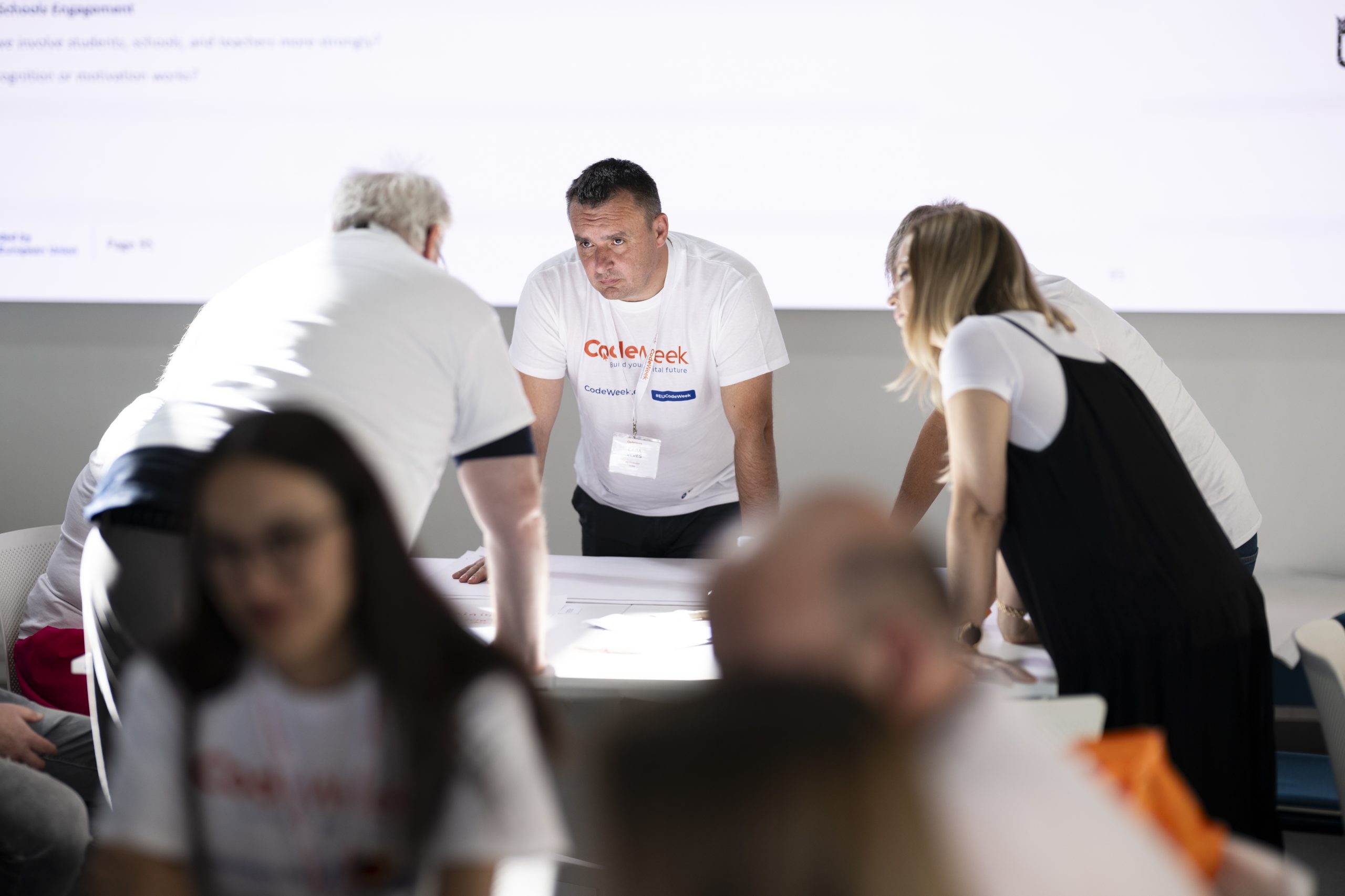
The community met in Brussels on 12 September 2024, in Sofia on 3 April 2025, and in Madrid on 18 and 19 September 2025. These three gatherings will be followed by another community meeting in Brussels on 24 September 2026.
Each meeting has given community members time to exchange experiences, explore shared challenges and develop ideas together, not only during the formal programme but also through the informal conversations that happen when people finally meet in the same room.
The upcoming Brussels meeting is itself being shaped through community participation. During a series of online preparation meetings, members proposed topics, discussed priorities and voted on the themes they most wanted to explore together.
The resulting discussions will focus on AI and Code Week, Strengthening the Community, Funding and Grants, and the Future of Code Week. Volunteer facilitators and community preparation groups are helping turn these themes into collaborative sessions.
Once again, the programme is being built with the community, for the community.
Growing through local communities
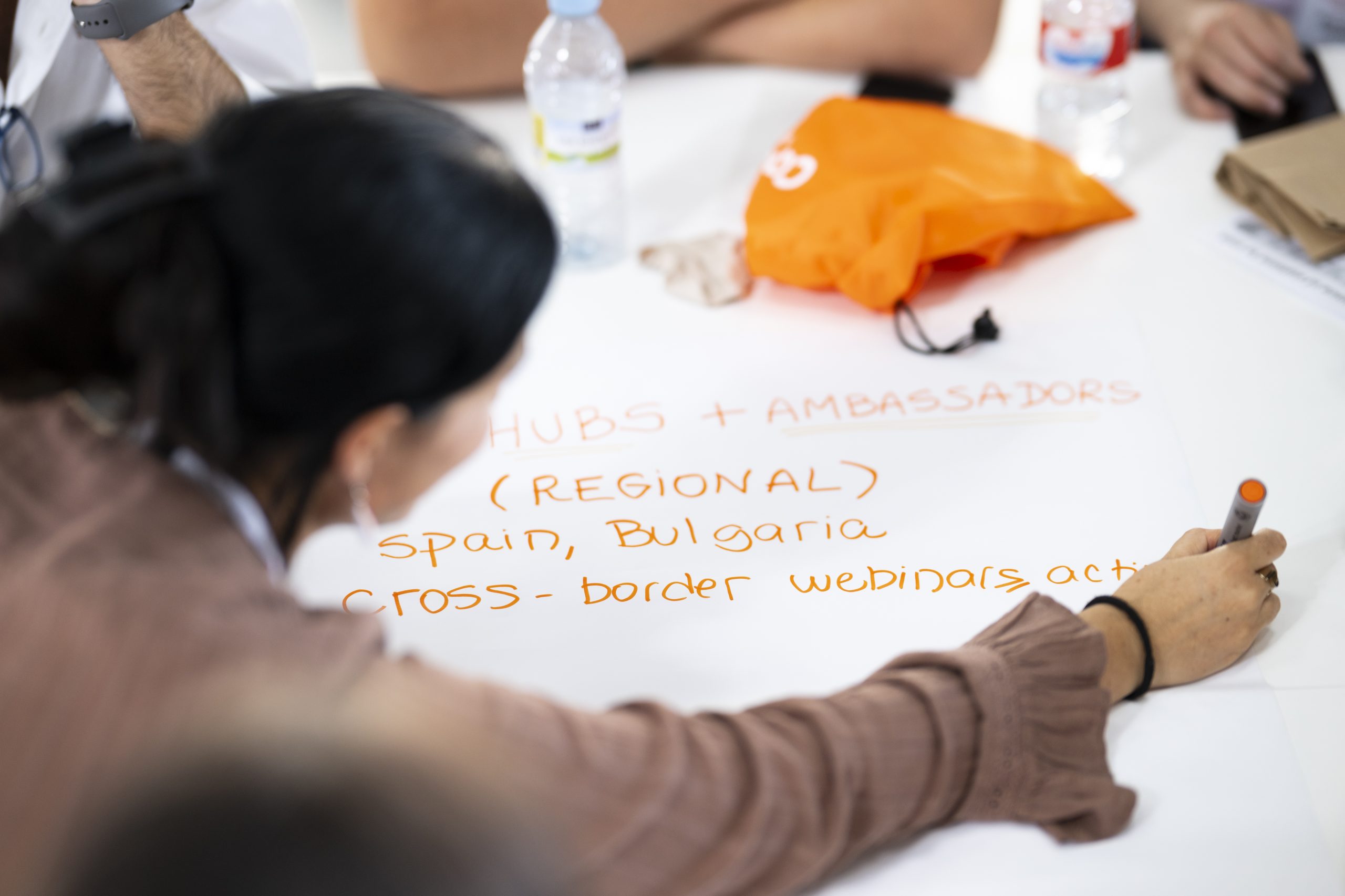
Alongside this work to strengthen engagement, National and Regional Hubs have played a central role in expanding and revitalising the network.
Hubs organised local calls for applications from new Leading Teachers to join the EU CodeWeek network, bringing new educators and new energy into national communities. They also contacted ministries and education authorities to identify new Edu Coordinators and strengthen the connection between EU Code Week and national education systems.
When Ambassador roles changed hands, hubs helped identify new members or supported transitions emerging from the grassroots community. This local knowledge has been essential: the people closest to each national community are often best placed to understand what support is needed and who can help provide it.
International grants also contributed to community development. Grant-supported projects in North Macedonia, Hungary and Lithuania helped strengthen local ecosystems and identify new Leading Teachers, ensuring that funded activities also contributed to longer-term community capacity.
We also launched two international calls for community members: the first in December 2025 and the second in March 2026. Although the calls were organised at the international level, selection remained rooted locally. Applications were shared with the relevant hubs and established community members, who participated in the selection process.
This balance allowed us to reach new people internationally while respecting the grassroots character of EU Code Week and the knowledge already present in each country.
What this growth looks like
Our latest internal community lists show clear growth across all three networks.
Ambassador network
58 to 74 members
Edu Coordinator network
17 to 26 members
Countries
across the combined community footprint
The Ambassador network grew from 58 to 74 members, an increase of 27.6%. Its geographic coverage expanded from 33 to 36 countries, adding Iceland, Liechtenstein and North Macedonia while retaining every country represented in 2024.
The Edu Coordinator network grew from 17 to 26 members, an increase of 52.9%. Coverage expanded from 13 to 22 countries, creating new links in Austria, Bulgaria, Cyprus, Germany, Italy, Latvia, Liechtenstein, Romania and Ukraine.
The Leading Teacher community also expanded substantially. Its geographic coverage grew from 31 to 36 countries, adding Liechtenstein, Lithuania, Sweden, Türkiye and Ukraine while retaining every country represented in 2024.
Some of the strongest country-level increases among Leading Teachers were recorded in:
- Italy: +24
- Ukraine: +21
- Türkiye: +20
- Bulgaria: +19
- Lithuania: +16
- North Macedonia and Poland: +10 each
- Belgium, Germany and Latvia: +8 each
Across the three networks, the combined geographic footprint expanded from 37 to 39 countries. Iceland and Liechtenstein were the two countries entirely new to the overall community footprint.
Collectively, the community was already represented across all 27 EU Member States in 2024. Recent growth has therefore not simply completed the map; it has deepened representation within individual networks and created stronger support structures in more countries.
Just as importantly, every country represented within each network in 2024 remains represented today. Growth has added reach without losing the geographic foundations already in place.
Growing from within
The comparison also reveals something that totals alone cannot show: community members are moving between roles.
Four people who were Leading Teachers in 2024 are now Ambassadors. Two former Ambassadors are currently supporting their local ecosystems in the Leading Teacher network, while two former Edu Coordinators continue contributing as Leading Teachers.
These movements are an important sign of community development.
A Leading Teacher becoming an Ambassador brings classroom knowledge and experience into a broader coordination role. A former Ambassador contributing as a Leading Teacher continues to share valuable expertise directly with educators. An Edu Coordinator remaining involved through another role helps preserve relationships and institutional knowledge.
People do not necessarily leave the community when they leave a particular position. Sometimes they take the next step, finding a role that better matches their current circumstances or continuing to contribute in a different way. This is what community means.
Growth that can be sustained
For a volunteer community, sustainability cannot mean expecting the same people to carry the same responsibilities indefinitely.
Volunteers’ availability changes. Professional and personal commitments evolve. Sometimes people need to reduce their involvement or take time to recharge. A healthy community must make space for this without losing the relationships, knowledge and momentum already built.
That is why welcoming new members is not only about reaching a larger number. It is also about ensuring that local communities have enough people to share responsibilities, support one another and maintain continuity when someone needs to step back.
Change is therefore not the opposite of continuity. When approached with care, it is what makes continuity possible.
The continued involvement of experienced members, the arrival of new volunteers and the movement of people between roles all contribute to a more resilient ecosystem. New members bring fresh perspectives and connections. Experienced members provide knowledge and guidance. Hubs, ministries, grantees and local communities help ensure that this energy is connected to real needs on the ground.
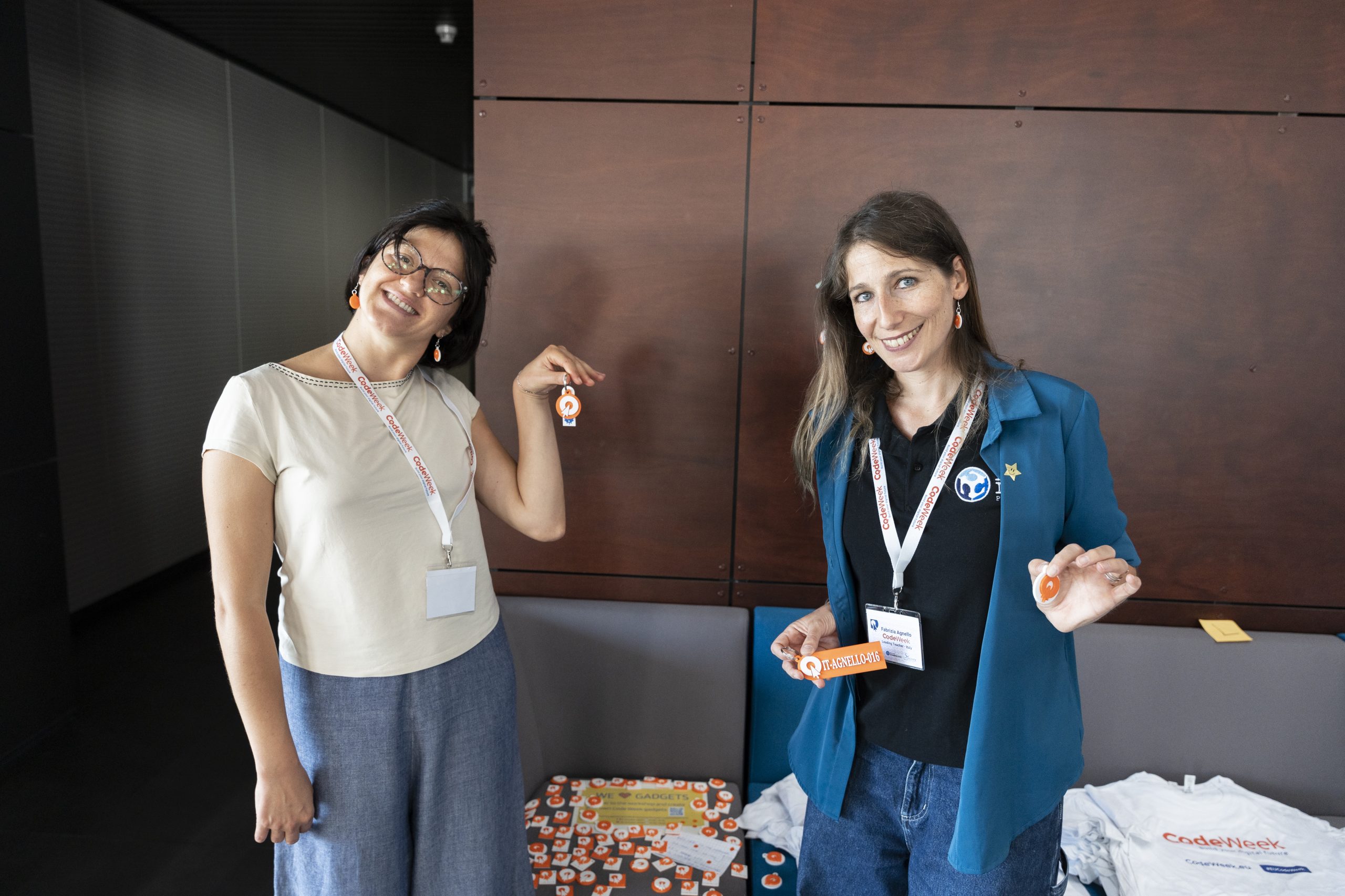
Returning to Brussels, looking ahead together
When the community returns to Brussels this September, it will not be exactly the same community that met there in 2024.
It will be larger and more geographically diverse. It will include new educators and new community leaders.
But the principle at the centre remains the same: EU Code Week is a grassroots initiative built by people who believe in sharing coding, computational thinking and digital creativity with others.
The past two years have shown what becomes possible when growth begins with listening and continues through collaboration. By creating spaces for people to connect, supporting local communities to welcome new members and allowing volunteers to contribute in ways that evolve over time, we are building more than a larger network.
We are building a community that can continue growing, adapting and supporting one another for the years ahead.
We look forward to taking the next step together in Brussels.
