
Coding in early years: where magic meets logic
24/06/26
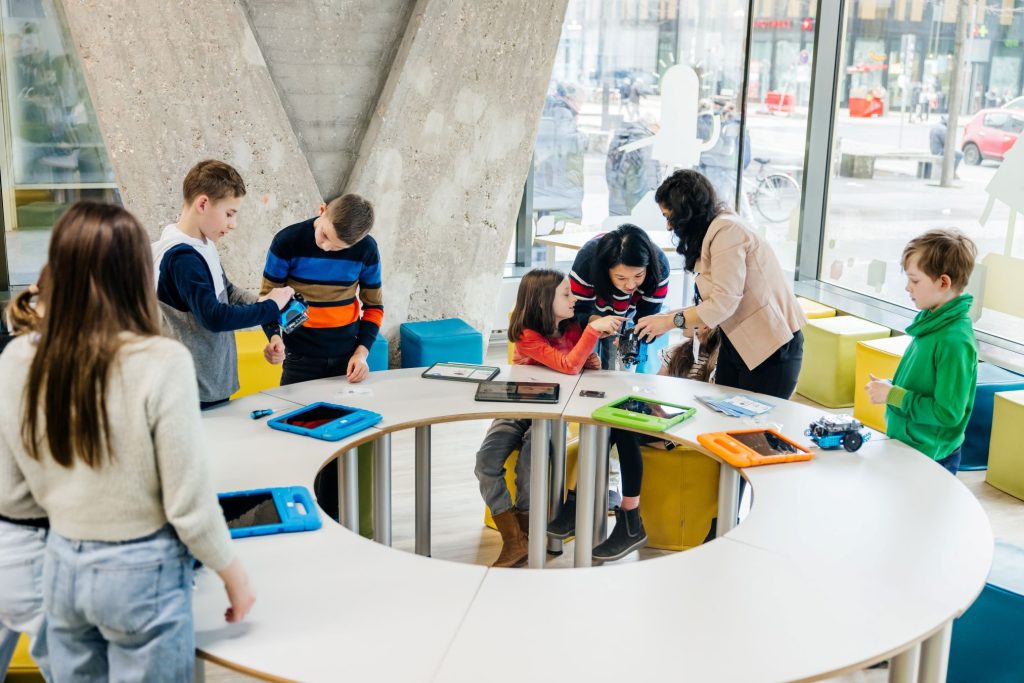
At the Naša radost Preschool Organisation in Subotica, Serbia, Edina Đorović is introducing coding to children long before they encounter traditional computer science classes. In her bilingual Serbian-Hungarian “Ladybugs” classroom, made up of children aged four to five, coding is woven into storytelling, movement and outdoor exploration.
During Code Week, the classroom integrated coding into the “Lakes Through Children’s Eyes” eTwinning project, where children used Bee-Bot and Whales Bot robots to explore themes linked to lakes, biodiversity and environmental awareness through outdoor STEAM activities.
For Edina, coding works best when it becomes part of a larger creative experience rather than a separate technical exercise.
“In our classroom, coding is never an isolated task or a rigid ‘lesson’ on the schedule,” she explains. “Guided by STEAM principles, we use technology and ICT as creative tools rather than ends in themselves.”
Edina says children absorb programming concepts more naturally when coding is integrated into stories, role-play and art.
“Instead of following dry instructions, the children are ‘helping a hero find the path to the castle’ or ‘programming a robot to collect pollen from flowers they painted themselves’. When coding is woven into imagination and drama, children don’t feel the effort of learning; they simply live the story, naturally absorbing algorithmic thinking along the way.”
Building confidence through coding
While the robots and activities captured the children’s attention, some of the most meaningful moments came from seeing quieter students become more engaged and confident.
“The most powerful moments aren’t necessarily about a successfully completed task, but about social and emotional growth,” Edina explains. “Code Week is a constant, joyful presence in our classroom, and our projects are always full of challenges and new discoveries.”
She recalls one particular moment that stayed with her throughout the activities.
“I remember a specific child who was naturally withdrawn and rarely spoke in a group setting. During a collaborative mission, this child completely ‘blossomed’. Seeing them take the lead with such joy, explaining the next move to their peers and actively participating in the team, was a clear sign that our efforts were worth it,” Edina says.
For the teacher, experiences like these demonstrate that coding can support much more than digital skills alone. “It reminds me that coding is not just about technology; it is a key that can unlock a child’s confidence and communication.”
Where imagination meets technology
The classroom activities often felt more like adventures than lessons. Asked what kind of coding game her students would create themselves, Edina imagines a large-scale STEAM pirate treasure hunt.
“Our classroom would transform into a vast ocean where the children design their own ‘islands’ using recycled materials and art supplies,” she says. “In this game, coding is the compass.”
Children would act as navigators, guiding robots across maps, solving riddles and scanning QR codes to unlock clues leading to a final treasure chest.
“It is a perfect blend of physical movement, logical mapping, and creative ICT use – turning every child into a brave explorer of the digital age.”
