Behind every EU Code Week activity is a community of people who believe in the power of coding, creativity and digital education to bring people together.
Across Europe, teachers, Ambassadors and volunteers are working together to make coding and computational thinking more accessible, inspiring learners and building connections that extend far beyond the classroom.
But what does being part of EU Code Week actually mean to the people involved? We asked members of our community to share their experiences.
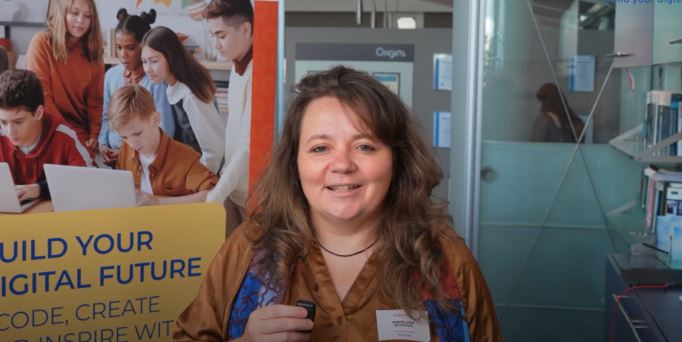
Meet the EU Code Week community in Lithuania, Portugal, Malta and Cyprus.
Watch the video on YouTube
Lithuania: A welcoming community where everyone belongs
For Violetta, a new EU Code Week Ambassador in Lithuania, building a supportive community is at the heart of the initiative.
Working with the country’s network of Leading Teachers, she highlights how important it is to create a welcoming environment where educators feel supported, encouraged and confident to get involved.
Her message is simple: join the community, connect with others and enjoy the experience.
Portugal: Sharing ideas and inspiring one another
In Portugal, EU Code Week Ambassador Angelina celebrates the spirit of collaboration among educators.
Through gatherings, shared experiences and the active participation of Leading Teachers, the Portuguese community continues to inspire new ideas and encourage more teachers to bring coding into their classrooms.
Sharing experiences helps educators inspire one another, both locally and across Europe.
It’s a reminder that some of the most valuable learning happens when teachers come together, exchange ideas and build on each other’s experiences.
Malta: Supporting teachers and building digital confidence
Malta’s Code Week community has been involved in the initiative for 11 years and continues to invest in teacher training and digital education.
The Maltese team shares how its work focuses on developing teachers’ confidence and competence in coding, technology and computational thinking.
Among its initiatives are programmes recognising schools as pioneers in computational thinking and coding, alongside professional development opportunities designed to support educators.
Their contribution highlights how sustained commitment to teacher development can help make digital education a lasting part of school life.
Cyprus: Using coding to connect communities
Alexis Moscofteros, a primary school teacher and EU Code Week Ambassador from Cyprus, has been involved in the initiative for around a decade.
For Alexis, Code Week offers opportunities to introduce students to coding and computational thinking through interactive, creative and engaging activities.
But its impact goes beyond digital skills.
He shares how educators in Cyprus have also used Code Week to encourage collaboration between Greek Cypriot and Turkish Cypriot communities, bringing teachers together who might otherwise have limited opportunities to work with one another.
It’s a powerful example of how a shared interest in education and technology can help build connections across communities.
One European community, countless opportunities
From Lithuania to Portugal, Malta to Cyprus, these stories show that EU Code Week is about much more than learning to code.
It’s about helping teachers learn from one another, giving young people opportunities to explore technology, and creating a European community where knowledge, creativity and experiences can be shared.
Every classroom activity, workshop and community initiative contributes to this wider movement, and everyone has something to bring.
Be part of the EU Code Week community
Whether you’re a teacher, student, parent, volunteer or digital enthusiast, there’s a place for you in EU Code Week. Discover activities, connect with educators and find out how you can get involved.
