
Taking coding beyond the classroom and into the community
30/07/26
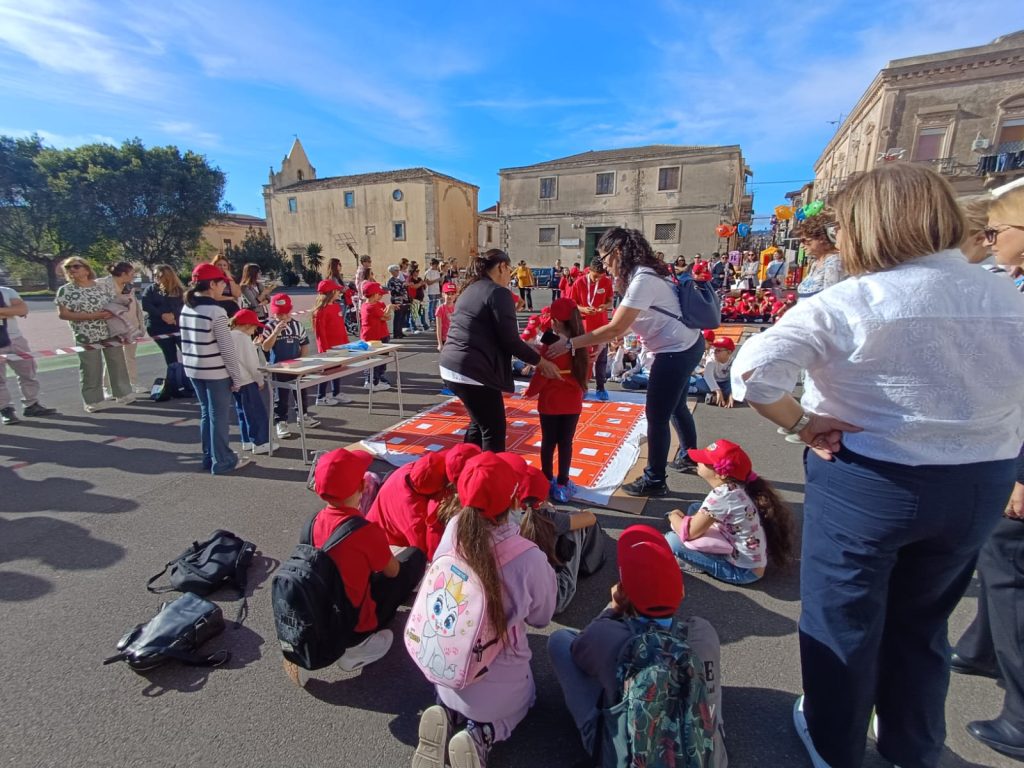
Thinking into the heart of the local community through Coding in Piazza, a project that transformed a public square into a space for learning, collaboration, and problem-solving.
Using the unplugged coding game CodyColor, students, teachers, families, and local residents came together to explore coding concepts without the need for screens or digital devices.
When students become the teachers
One of the most memorable aspects of the project was watching students step into a new role.
“In the classroom, children learn and practice computational thinking, but in the public square they became the real protagonists,” Carmela told us. “They were no longer just participants; they were able to explain the rules, demonstrate strategies and share their enthusiasm with families and visitors.”
“What impressed us most was the level of engagement,” Carmela said, as the event quickly attracted attention from parents, grandparents, and passers-by, many of whom decided to join the activities themselves.
Through CodyColor, visitors discovered that coding is not necessarily about computers, but, as Carmela explained, it is “about logic, problem-solving and collaboration.”
Seeing students confidently explain concepts to others was a powerful reminder of how learning can bring people together.
“It showed that computational thinking can become a shared experience that connects school, families and the wider community.”
Learning without screens
The project also challenged common assumptions about coding and technology. While many students were already familiar with unplugged activities through the CodyRoby approach, CodyColor introduced a new way of developing computational thinking through games, movement, and teamwork.
“Students quickly realised that coding is not about using a computer, but about following rules, recognising patterns, planning strategies and debugging mistakes,” Carmela said.
The unplugged format encouraged active participation and collaboration while helping students focus on the reasoning process itself.
“This helped them understand that computational thinking is a universal skill that can be practised anywhere, using simple materials and shared experiences.”
The approach also proved valuable for teachers.
“Many colleagues who had never taught coding before felt confident joining the project and guiding the activities,” she explained. “This helped create a shared culture of computational thinking across the whole school.”
The highlight of the project was a public championship that brought together students, teachers, families, and local residents.
“The public championship was the proudest moment of the project because it transformed an activity that had started in the classroom into a real community event,” Carmela said. Older students took on the role of ambassadors, helping others participate and explaining the challenges. For the wider community, the event demonstrated that learning does not need to remain inside school buildings.
“The public square became a learning space where children, families and citizens could interact, play, solve problems and have fun together.”
Perhaps most importantly, it highlighted the value of unplugged coding.
“People could immediately see that computational thinking is not about screens or technology alone; it is about creativity, logic, collaboration and perseverance.”
