From Tactile Letters to a 3D Learning Aid: Vukovar Gymnasium Students in the Girls in Digital Initiative
08/04/26
By Sanja Pavlović Šijanović, Leading Teacher, EU Code Week – Croatia
Davor Šijanović, Vukovar Gymnasium, Croatia
In the spirit of the Girls in Digital initiative, which highlights the importance of inclusion, innovation, and the real opportunities that digital skills open up for girls, the students of Vukovar Gymnasium took part in an activity that connects creativity, technology, and social responsibility. Through the project Učimo dodirom, they explored the topic of accessibility and reflected on how educational materials can also be useful for children who experience the world primarily through touch.
From Physical Textures to Tactile Literacy
The first step focused on direct experience and understanding tactile learning. The students created raised tactile letters using various materials, including cardboard, wool, string, modelling clay, and other easily available materials. During the process, they paid attention to the shape of the letters, the height of the relief, the spacing, and the texture of the materials so that the letters would be as clear and readable to the touch as possible.
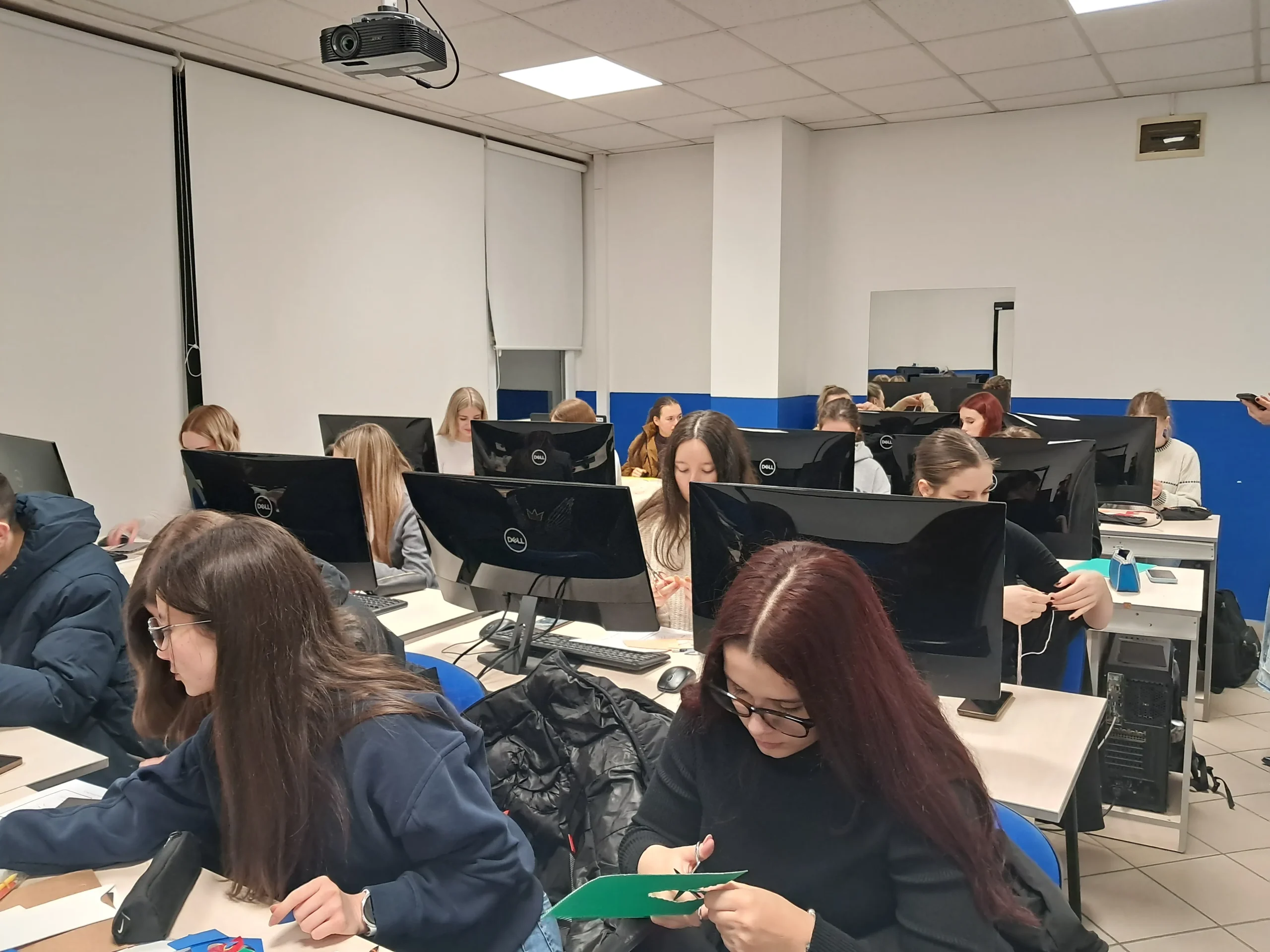
Creating the tactile alphabet
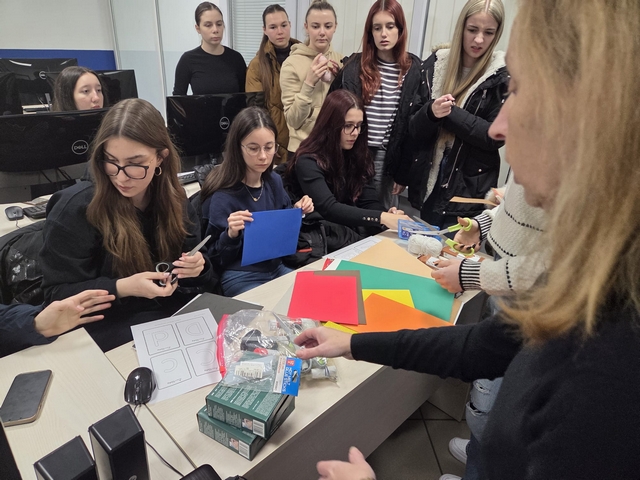
Scissors and paper
This work showed that designing materials for blind and visually impaired children requires a different approach from the one we are used to in visually oriented teaching. What appears clear and neat to the eye is not always sufficiently clear to the fingers.
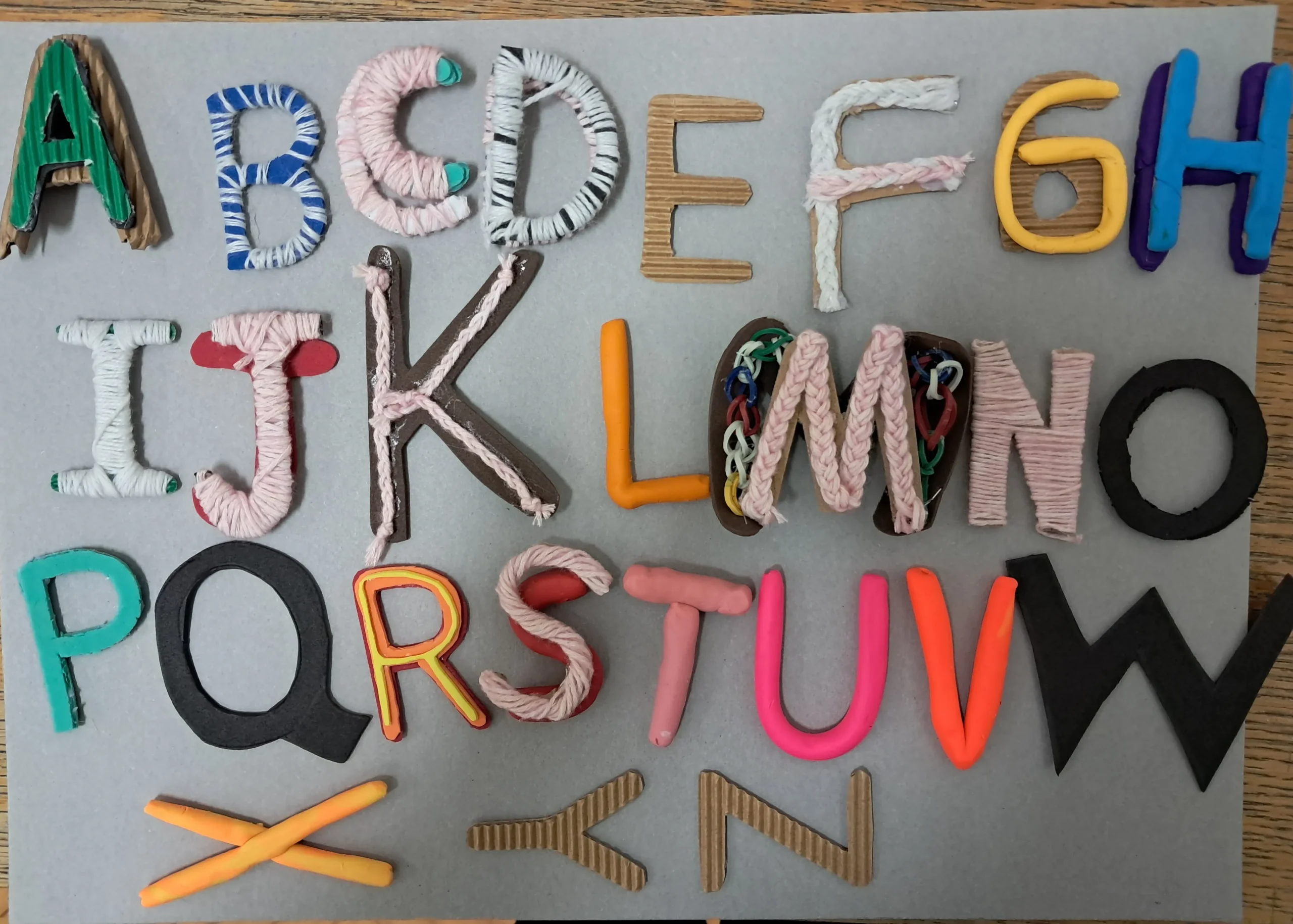
Tactile alphabet
Bridging the Gap: 3D Modeling for Inclusive Education
The continuation of the activity naturally led into the digital field. After working on tactile letters, the students used Tinkercad to design a 3D-printable learning aid intended for teaching letters in Braille. In this process, they connected their previously acquired understanding of tactile readability with the basics of digital modelling. They thought about the arrangement of the dots, the size of the elements, the precision of the design, and the possibilities for the practical use of the finished learning aid in teaching. In this way, the digital tool became a means of shaping a solution with real educational value.
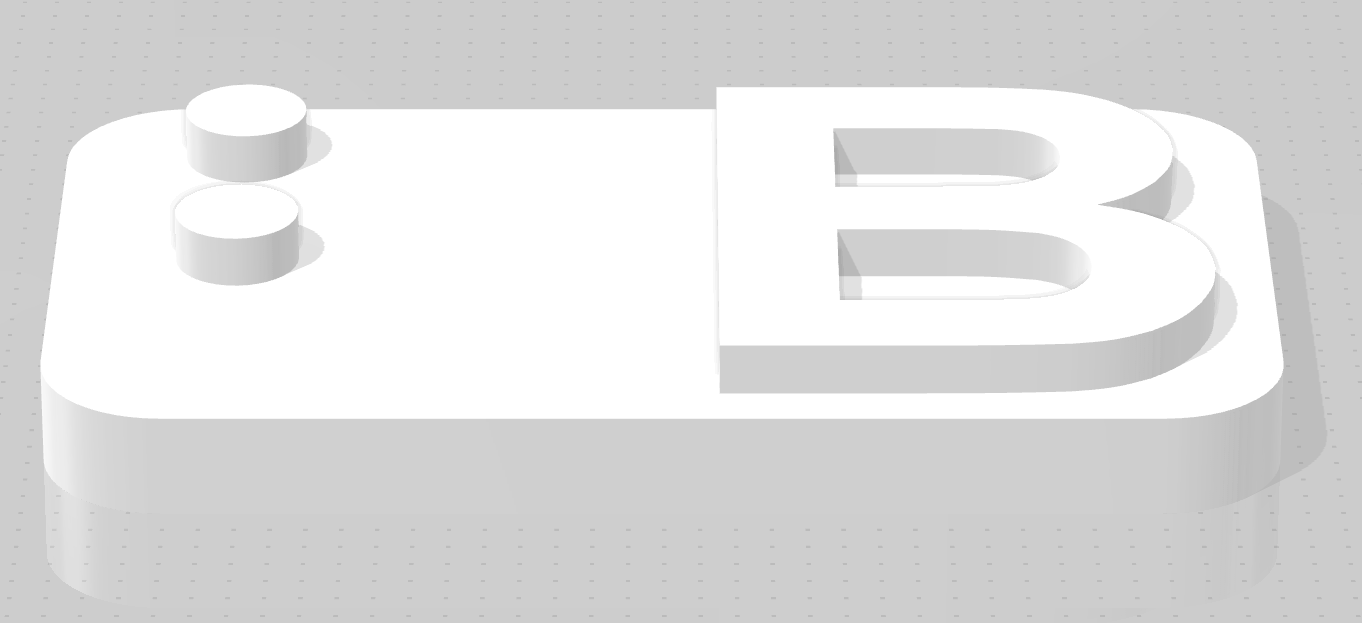
Letter design
Working in Tinkercad enabled the students to turn their own ideas into a precise digital model while also becoming familiar with the basic principles of 3D design. During the creation of the learning aid, they learned how to define exact dimensions, position elements correctly, adjust spacing, and adapt the shape of the object to its purpose. It was especially important for them to understand that every detail in a digital design affects how the aid will be used after printing, so working in Tinkercad also became a space for reviewing and refining their own solutions. In this way, the students developed not only digital skills, but also the ability to use technology purposefully, precisely, and responsibly.
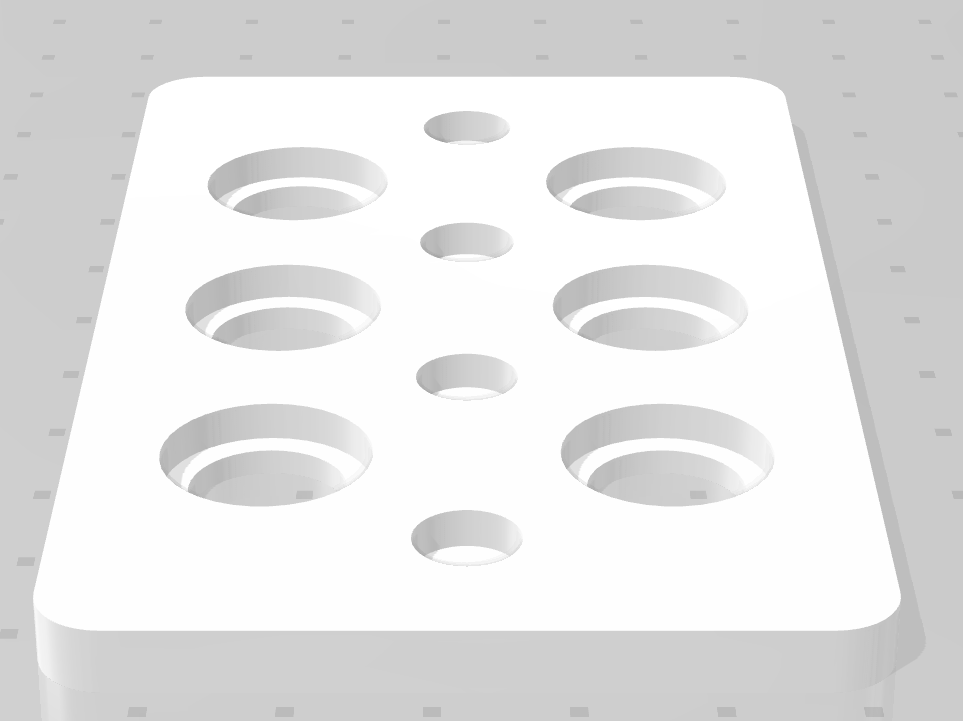
Design of a learning aid for learning Braille
Developing Digital Competence and Social Empathy
This is precisely where the special value of this activity within the Girls in Digital initiative lies. The students were not only users of technology, but also its active creators. From the initial idea and hands-on making to the digital model and 3D printing, they went through a complete learning process in which they developed spatial thinking, precision, collaboration, and confidence in their own abilities. Such an approach shows how important it is to provide girls with experiences in which digital skills emerge through meaningful work, solving real problems, and creating something that can serve others. For the educational community, this example is a valuable reminder that digital education is at its most powerful when it is connected to the real needs of the community. The students of Vukovar Gymnasium demonstrated that classroom knowledge can be transformed into a concrete contribution to more inclusive education. The creation of raised tactile letters and the design of a 3D learning aid for learning Braille were not separate activities, but part of the same process in which both digital competences and sensitivity to the needs of others are developed.
Examples like this confirm how important it is to give girls space to explore, create, and apply digital tools in real-life situations. Through this work, the students of Vukovar Gymnasium showed that digital skills gain their full value when they are connected with empathy, inclusion, and the desire to direct knowledge toward the well-being of others. That is why their contribution is so strongly connected to the message of the Girls in Digital initiative: digital education is not only about acquiring technical knowledge, but also about giving young people the opportunity to improve their community through their ideas, creativity, and responsible action.
