Beyond Coding: How a Croatian Primary School Connects Creativity, Technology and Learning through EU Code Week
19/11/26
From playful coding challenges to humanoid robots, artificial intelligence and environmental exploration, I. osnovna škola Čakovec demonstrates how continuous engagement in EU Code Week can transform digital education across the curriculum.
At I. osnovna škola Čakovec, a primary school in northern Croatia, EU Code Week is much more than an annual celebration of programming. It has become an integral part of the school’s educational culture, inspiring teachers and students to discover new ways of learning, creating and solving problems through technology.
Through continuous participation in EU Code Week and the Code4Europe initiative, the school has developed a dynamic learning environment where coding, computational thinking and emerging technologies are integrated into different subjects and learning experiences.
What began with coding activities, computational thinking exercises and educational robotics has grown into a broad, interdisciplinary approach connecting computer science with geography, mathematics, environmental education, languages, arts, creativity and other curriculum areas.
The school’s central message
Coding is not just a subject to be taught. It is a language that helps students understand, explore and shape the world around them.
Building a sustainable culture of coding
The school’s involvement in EU Code Week reflects a long-term commitment to developing students’ digital competences and empowering teachers to introduce programming into everyday learning. Students of different ages regularly participate in coding workshops, robotics challenges, creative problem-solving activities and collaborative projects.
Younger children discover algorithms through games, puzzles, pixel art and educational robots, while older students progress towards programming physical devices, working with digital data and exploring artificial intelligence.
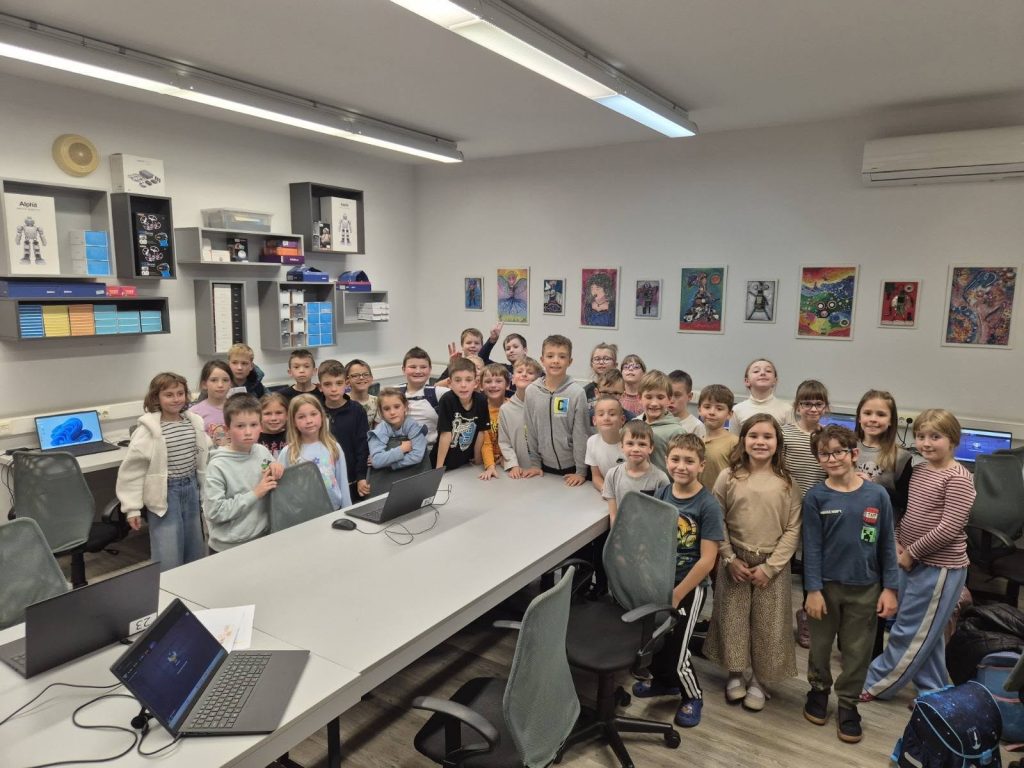
The school’s traditional Coding Evenings have become particularly engaging opportunities for students to explore technology outside conventional classroom settings. During these events, students experiment with drones, micro:bit devices, Ozobot robots and Osmo educational tools, discovering how programming instructions translate into real-world actions. Creative coding games, themed challenges and collaborative problem-solving activities motivate students to explore technology through experimentation, teamwork and imagination.
These initiatives are not limited to a particular week or annual event. Instead, EU Code Week serves as inspiration for continuous learning activities throughout the school year, with progressively more challenging tasks and opportunities for participation.
Connecting coding across subjects and age groups
One of the most distinctive characteristics of I. osnovna škola Čakovec is its commitment to interdisciplinary teaching and introducing digital creativity from the earliest years of education. Coding is integrated into different curriculum areas, demonstrating that computational thinking can enrich learning in mathematics, geography, environmental education, arts and everyday classroom activities. In early primary education, teachers connect programming concepts with storytelling, traditional games, creative expression and hands-on exploration.
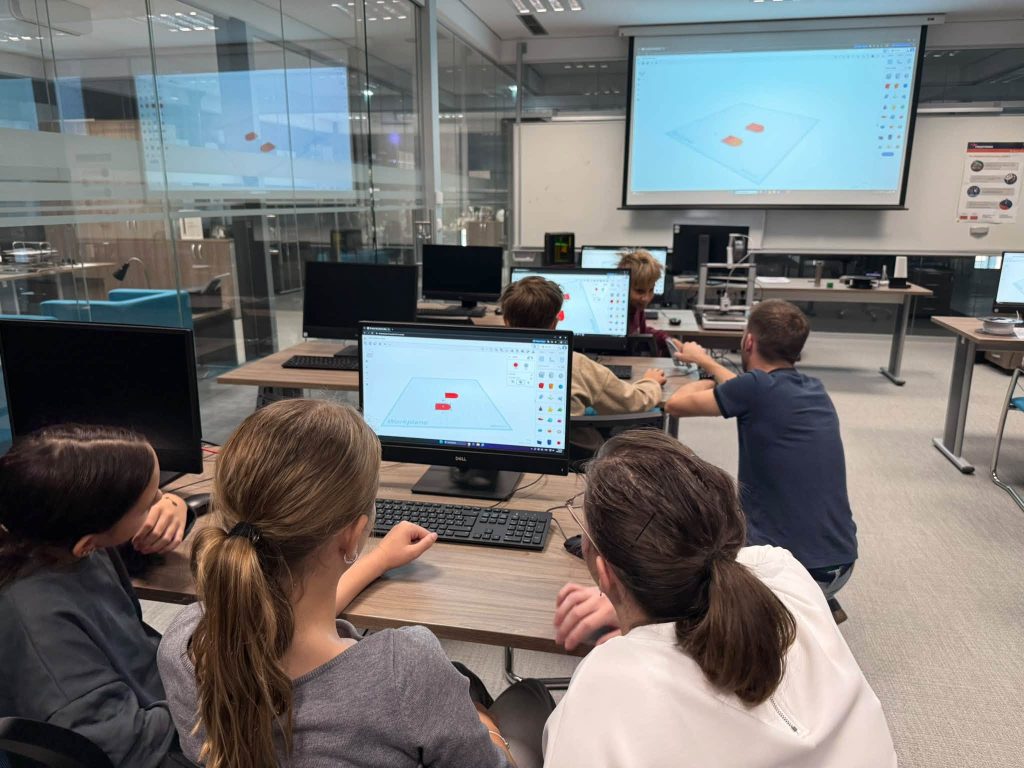
Under the guidance of Danijela Topličanec, younger students explore how traditional games, problem-solving and modern technologies can complement one another. Activities involving creative challenges and 3D modelling demonstrate how digital tools can support imagination, logical thinking and collaboration.
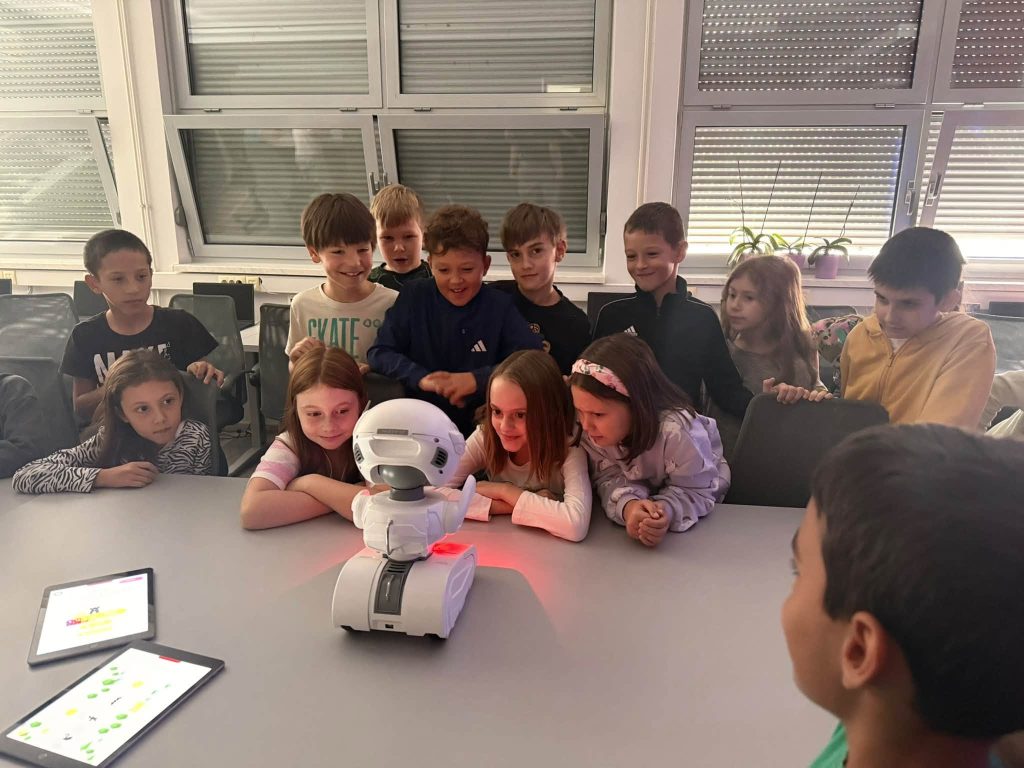
Her students also participate in activities introducing humanoid robots, programming and artificial intelligence, gaining early experience with technologies that may initially seem complex or inaccessible. Such experiences help children develop confidence and curiosity while demonstrating that technology can be understood and explored through play.
The connection between computer science and geography provides another excellent example of meaningful interdisciplinary learning. Students explore biodiversity, environmental changes, geographic information systems and digital mapping while discovering how technology supports environmental observation, data collection and analysis. Through practical activities involving soil temperature measurements, digital maps, ArcGIS StoryMaps and environmental investigations, they develop computational thinking alongside geographic and scientific literacy.
Teachers Dr Ivana Ružić and Danijela Perenc-Jaušovec collaborate to design and implement interdisciplinary learning experiences that combine artificial intelligence, virtual reality, humanoid robotics and geographic concepts. Their work demonstrates how digital technologies can enrich different school subjects while encouraging students to investigate real-world environmental challenges.
From educational robots to artificial intelligence
The school’s commitment to innovative education extends from introductory programming to advanced applications of robotics and artificial intelligence. Students explore different educational robots and programmable devices, including micro:bit, Ozobot, Codey Rocky and other interactive learning tools. Through hands-on experimentation, they learn how to create algorithms, programme robot movements, test commands, identify errors and improve their solutions.
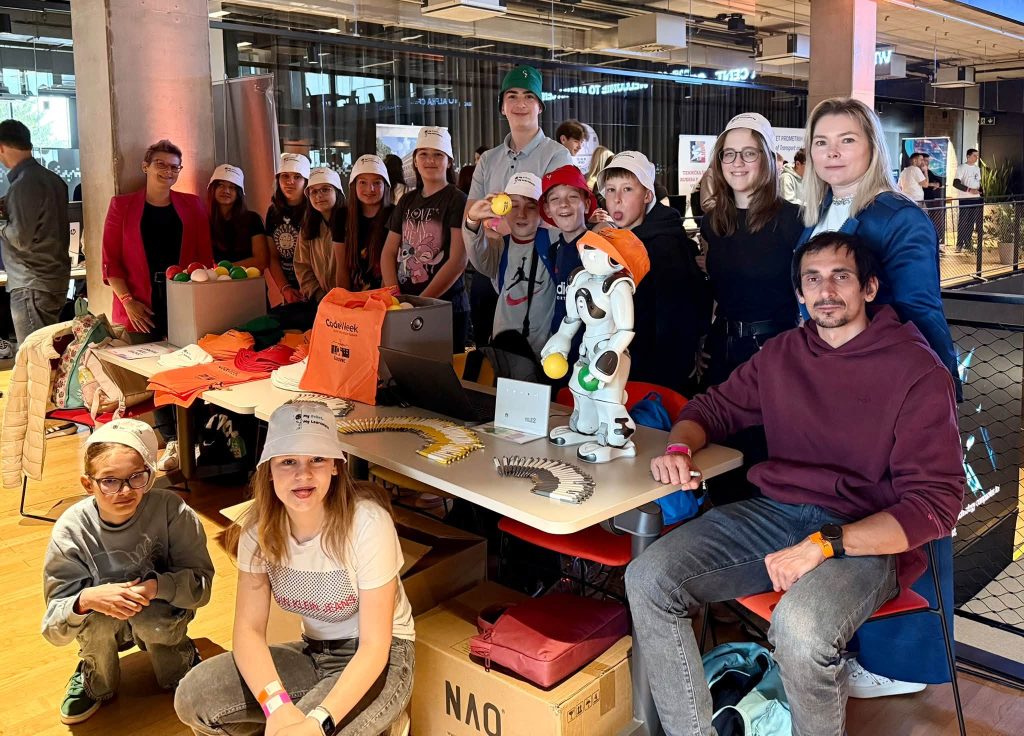
A particularly innovative element is the integration of the NAO humanoid robot as an educational assistant. Humanoid robotics introduces an exciting new dimension to classroom learning. Students interact with robots, observe how they respond to commands and explore how artificial intelligence and programming support communication between humans and machines.
The school also shares its expertise in humanoid robots, artificial intelligence and virtual reality through workshops and professional development activities for teachers from other institutions. Its approach goes beyond teaching students how to programme robots. It explores how intelligent technologies can become meaningful tools for learning across different subjects and age groups.
The teachers behind the innovation
The success of EU Code Week at I. osnovna škola Čakovec is driven by a dedicated team of teachers who combine expertise in digital technologies, interdisciplinary learning and creative teaching approaches.
- Dr Ivana Ružić, a Computer Science Teacher with a PhD in Information Sciences, leads innovative initiatives involving artificial intelligence, humanoid robotics, coding and international collaboration. With extensive Erasmus+ experience, she actively contributes to curriculum development, teacher training and the wider EU Code Week community.
- Ivana Vadlja, a Computer Science Teacher, engages students in programming, computational thinking and educational robotics through hands-on workshops, coding events and collaborative activities, also sharing her expertise with other schools.
- Danijela Perenc-Jaušovec, a Geography Teacher, connects geography with digital mapping, environmental exploration, artificial intelligence, virtual reality and humanoid robotics, demonstrating the potential of interdisciplinary learning.
- Maja Hižman, a Computer Science Teacher, inspires students through creative coding and robotics activities while promoting digital education and knowledge sharing across schools.
- Rea Guterman, a Computer Science Teacher, designs engaging coding challenges that foster logical thinking, creativity, teamwork and problem-solving skills.
- Danijela Topličanec, a Primary School Classroom Teacher, introduces younger learners to coding and digital creativity by combining traditional games, art, robotics and 3D modelling with innovative, collaborative learning experiences.
Together, these six teachers demonstrate how collaboration across subjects and age groups can make coding accessible, engaging and meaningful for every learner, transforming EU Code Week into a continuous source of educational innovation.
Sharing coding beyond the school walls
An important aspect of the school’s EU Code Week involvement is its commitment to sharing knowledge and inspiring other educational institutions. Teachers from I. osnovna škola Čakovec actively organise coding and robotics workshops for students from other schools, introduce colleagues to innovative teaching methods and participate in professional development events.
Through initiatives such as Robots in the Classroom, students from partner schools have opportunities to experiment with educational robots, explore programming commands and discover the possibilities of human–robot interaction. The school also promotes EU Code Week among educators through activities such as Code&Teach, providing practical guidance on registering activities, integrating computational thinking into teaching and participating in European coding initiatives.
International cooperation further enriches these experiences, enabling students and teachers to exchange ideas and discover how coding and digital creativity can connect different cultures and educational environments.
By encouraging teachers to experiment with new approaches and share good practices, the school contributes to the growth of a wider community of educators committed to digital innovation.
More than coding: preparing students for the future
At I. osnovna škola Čakovec, coding is not viewed simply as preparation for a future career in technology. It is an educational approach that helps students develop the competences needed to become curious, creative, confident and responsible citizens.
- Through coding, students learn to break complex problems into smaller steps, experiment with different solutions, learn from mistakes and collaborate with others.
- Through robotics and artificial intelligence, they discover how technology interacts with the physical and social world.
- Through interdisciplinary projects, they recognise connections between technology, environmental sustainability, geography, mathematics, creativity and everyday life.
- Through early exposure to digital creativity, even the youngest learners discover that programming can be fun, accessible and meaningful.
- Through international collaboration, they develop openness to new ideas, cultures and approaches to learning.
A journey that continues
For I. osnovna škola Čakovec, EU Code Week is not a one-time celebration but an ongoing journey of discovery, collaboration and innovation. It connects students and teachers, different school subjects, local educational communities and international partners. From playful coding challenges and robotics workshops to AI-supported learning and interdisciplinary environmental investigations, every activity creates new opportunities for students to explore their potential.
The most important achievement is not the number of robots programmed or workshops organised, but the curiosity, confidence, creativity and collaborative spirit that students develop along the way. The experience of I. osnovna škola Čakovec demonstrates how committed teachers, sustained collaboration and a shared vision can make coding a meaningful part of learning across the curriculum.
At this Croatian school, EU Code Week does not end when the celebration is over. It continues through everyday learning, creative projects, international partnerships and the ideas of young digital creators, inspiring students to become not only users of technology, but active creators of the digital future.
Feeling inspired?
Coding activities can happen all year round. Read more from I. osnovna škola Čakovec, or put your own activity on the EU Code Week map.
