




Hackathons
Bring your ideas to life!

Hackathons
A hackathon is an event where participants with diverse skills collaborate to tackle global challenges. Participants form teams to brainstorm, design, and code, aiming to produce a working solution or prototype by the event's conclusion. Beyond fostering innovation and teamwork, EU Code Week hackathons offer a platform for young enthusiasts to learn, showcase their talents, and connect with like-minded peers.
Adapting the traditional hackathon format, the EU Code Week Hackathons take into consideration the age of the participants and cater to the unique skills, insights, and interests of adolescents. The aim of the EU Code Week Hackathons is to inspire young people to develop their coding and problem-solving skills by engaging them in collaborative, creative, and innovative projects.
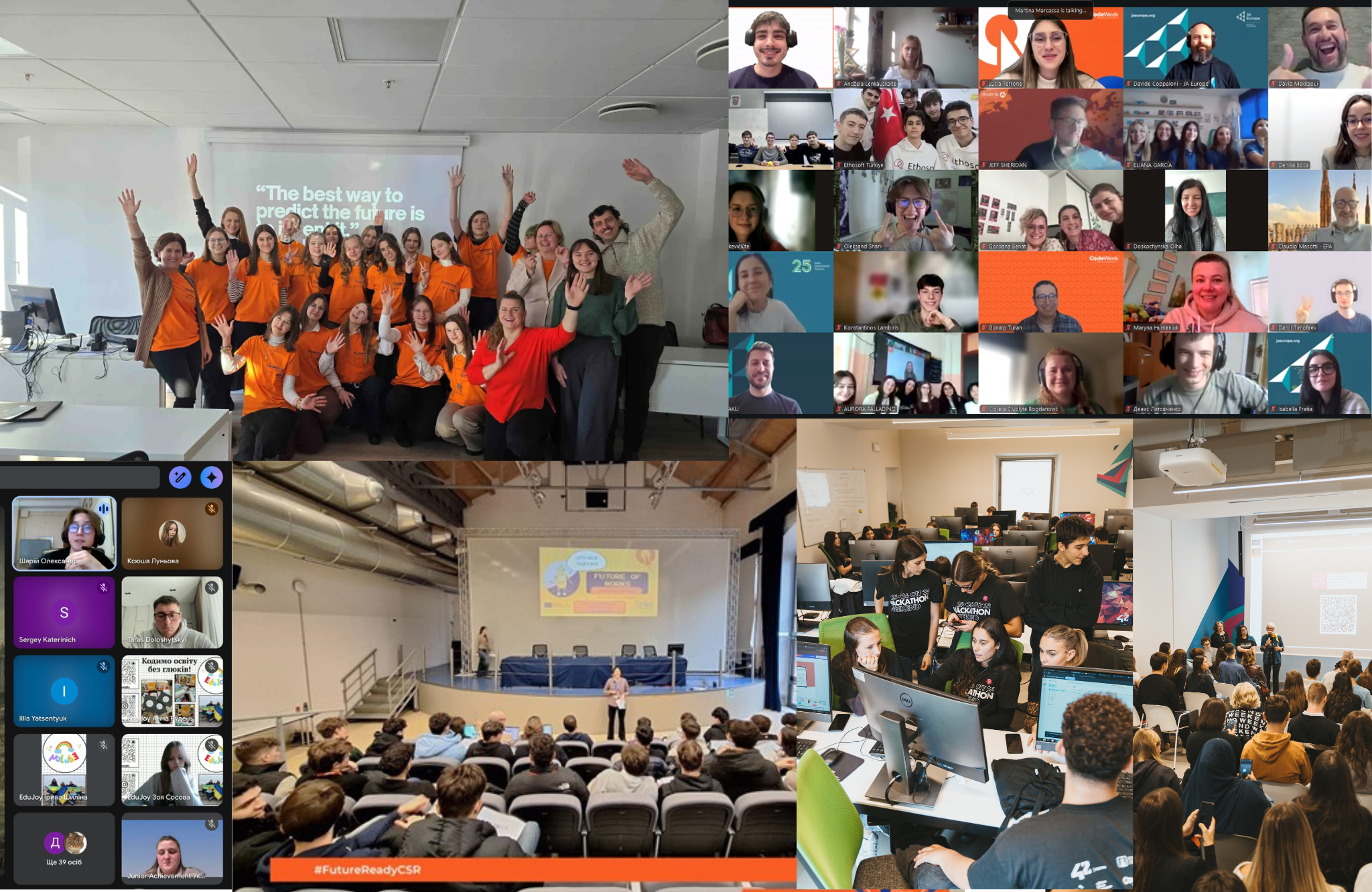
EU Code Week Hackathons 2025-26
EU Code Week Hackathons share a common theme that strengthens connection and belonging among young innovators across Europe. The central theme for the 2025 edition is From Code to Community: Bridging Digital Skills and Social Impact..
The nine national hackathons — Italy (Florence), Greece, Croatia, Turkey, Ukraine, Lithuania, France , Italy (Turin) and Spain — marked a vibrant journey of creativity and collaboration. All the national hackathons took place from November 2025 until the end of January 2026 with a total of nearly 600 young innovators (ages 15–19) participating, proving that digital skills aren't just for building apps—they are the ultimate tools for social change.
The EU Finals took place on 11 March 2026, where all national finalists pitched their extraordinary projects to an expert jury and to an international audience. Congratulations to the winners: Fast & Curious (Ukraine), My Story Team (Croatia) and Ethosoft (Turkey) as well as to all the other competing teams!
The spirit of Code Week doesn't end at the Finals: it marks the beginning of a new chapter where these young innovators will continue to use their skills to bridge gaps and build a more inclusive digital future.