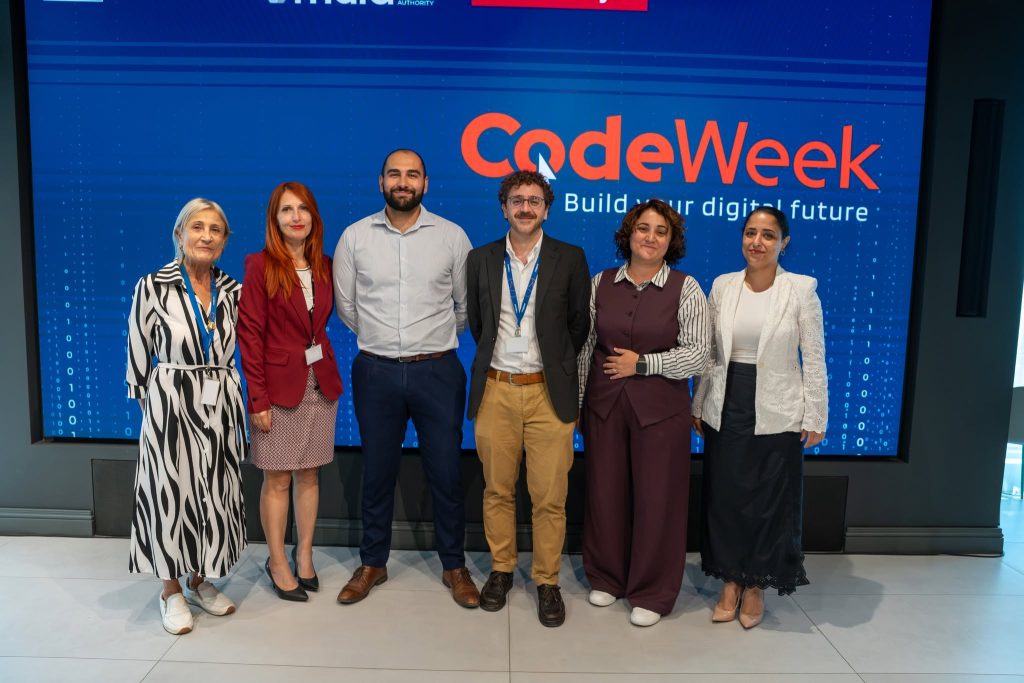
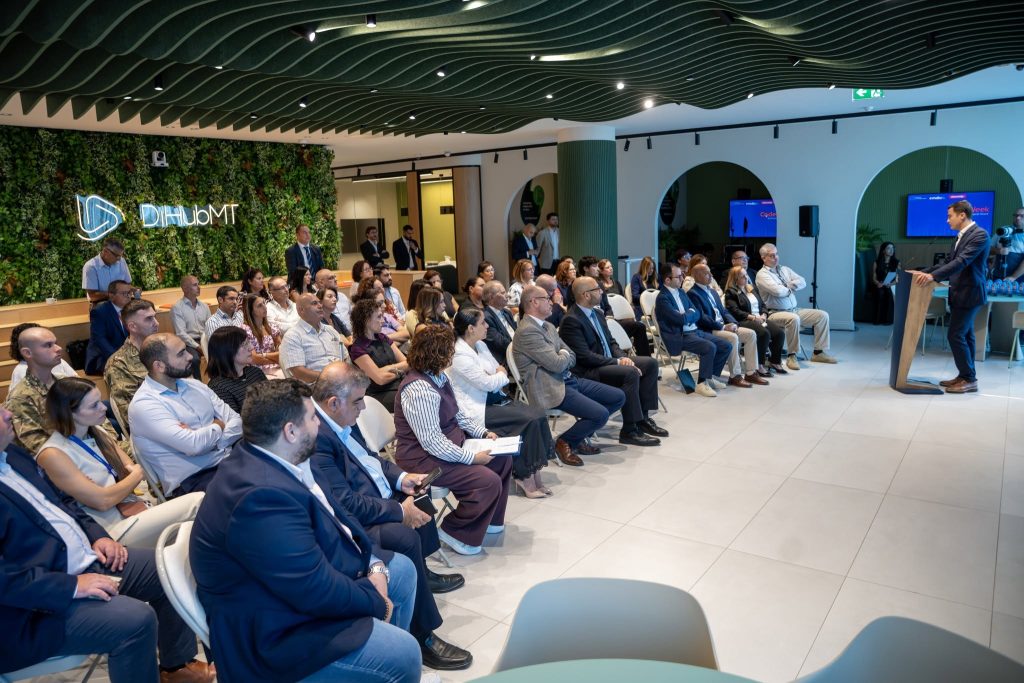
On 5 October 2026, the Malta Digital Innovation Authority (MDIA) hosted the national launch of EU Code Week Malta at DiHubMT. The event brought together educators, policymakers, industry representatives and key stakeholders to celebrate the country’s growing commitment to digital education and prepare for this year’s EU Code Week activities across Malta and Gozo.
Held in the presence of the Minister for the Economy, Enterprise and Strategic Projects, Hon. Silvio Schembri, the event highlighted the important role that schools, educators, government and industry play in helping young people develop the skills they need for an increasingly digital world.
Building Malta’s digital future through education
EU Code Week offers an opportunity to inspire the next generation of digital innovators, raise awareness of careers in technology and encourage schools and communities to make digital learning accessible, engaging and relevant.
As digital technologies continue to shape how we live, learn and work, digital competence is becoming an essential life skill. EU Code Week encourages young people to move beyond simply using technology and discover how they can create, understand and shape it themselves.
From coding workshops and robotics sessions to cybersecurity awareness, digital storytelling, artificial intelligence and computational thinking challenges, activities can introduce learners to digital concepts in practical and creative ways. Importantly, participation does not require advanced technical knowledge, making EU Code Week accessible to educators and learners with different levels of experience.
For Malta, the initiative also supports the country’s wider ambition to strengthen digital skills across society and prepare young people for a future in which digital competence will be increasingly valuable across all professions and sectors.
MDIA: Supporting the EU Code Week community in Malta
The Malta Digital Innovation Authority (MDIA) serves as Malta’s official EU Code Week Hub, coordinating national efforts and supporting schools, educators, organisations and other stakeholders in taking part in the initiative.
Through awareness campaigns, competitions, educator support, partnerships and community engagement, MDIA works to promote digital skills development throughout Malta and Gozo. Its ongoing collaboration with education stakeholders and partners helps create opportunities for learners of different ages and backgrounds to engage with technology in meaningful ways.
The national launch on 5 October provided an opportunity to celebrate this collaborative approach and recognise the dedication of those bringing digital learning into classrooms and communities.
Celebrating achievements at the EU Code Week Malta launch
A central focus of the event was recognising the schools and educators helping to make digital education a priority in Malta, alongside the introduction of new initiatives designed to encourage participation and creativity.
A message of support from JA Europe
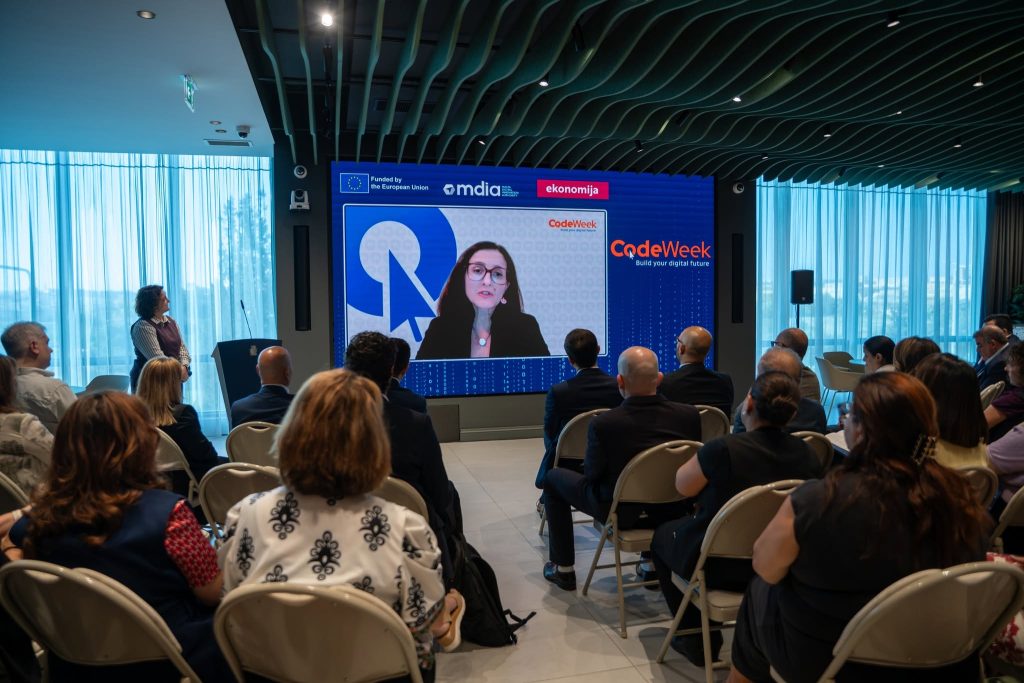
Participants heard a special video message from Diana Filip, Deputy CEO and Chief Development Officer at JA Europe, who highlighted the importance of EU Code Week in equipping learners with future-ready digital skills.
Her message also recognised the enthusiasm and commitment demonstrated by educators, schools and communities across Malta and Gozo, whose efforts continue to make digital learning opportunities available to more young people.
Recognising 10 EU Code Week School Label recipients
One of the highlights of the launch was the recognition of 10 Maltese schools that successfully achieved the EU Code Week School Label 2026–2028.
The recognition acknowledges their commitment to integrating coding and computational thinking into educational practices and creating opportunities for students to develop digital skills as part of their learning experience.
These schools demonstrate how digital education can become part of everyday teaching and learning, helping students build confidence, creativity and problem-solving abilities.
Celebrating seven educators
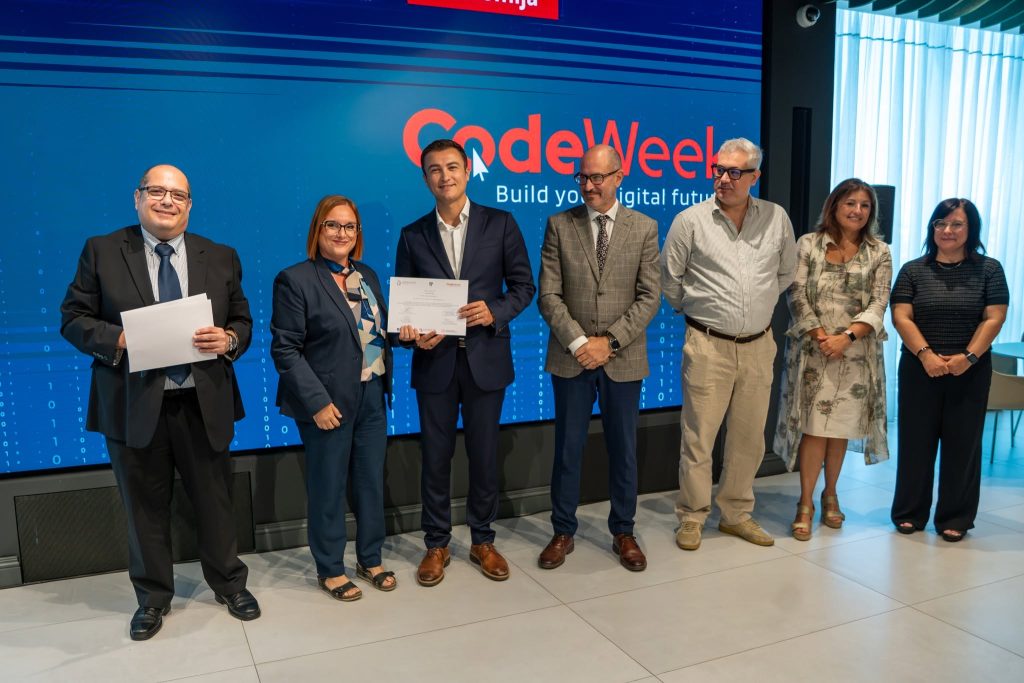
The event also recognised seven educators who successfully completed the EU Code Week Educator Programme 2026.
Their achievements reflect the important role teachers play in bringing digital learning into the classroom. By developing their own knowledge and confidence, educators can introduce students to new technologies and encourage them to explore digital skills in engaging and practical ways.
New challenges to inspire creativity and innovation
Alongside celebrating existing achievements, the launch introduced two initiatives designed to encourage schools and students to take an active role in EU Code Week 2026.
Minecraft Education: Future Mobility Malta Challenge
The Minecraft Education: Future Mobility Malta Challenge invites students to explore ideas about the future of mobility through creativity, design and digital problem-solving.
Using a familiar digital environment, the challenge encourages learners to think creatively about future transport and mobility concepts while applying digital skills to real-world questions.
The second edition of the Funovation Competition
MDIA also announced the second edition of the Funovation Competition, encouraging schools to organise and register EU Code Week activities that promote digital skills, innovation and creative learning.
The competition provides another opportunity for schools to engage students in practical activities and contribute to the wider EU Code Week movement across Malta and Gozo.
Looking ahead to EU Code Week 2026
With EU Code Week 2026 taking place from 10 to 25 October, the national launch has set the stage for another period of digital learning, creativity and collaboration across Malta and Gozo.
MDIA is encouraging schools, educators, businesses, organisations, parents and community groups to get involved by organising their own activities, joining existing initiatives and registering events on the EU Code Week platform.
Activities can take many forms, from introductory coding sessions and unplugged computational thinking exercises to robotics workshops, digital storytelling projects and discussions about artificial intelligence. Every activity, regardless of its size, can help make digital learning more accessible and encourage more people to discover what they can achieve with technology.
The achievements celebrated at Malta’s national launch demonstrate what is possible when educators, schools, industry and government work together. Through continued collaboration and participation, Malta is helping to build a digitally skilled, innovative and future-ready society.
Get involved in EU Code Week 2026
Whether you are a teacher, student, parent, business or community organiser, you can be part of EU Code Week. Organise an activity, encourage others to participate and help bring digital skills to more learners across Malta and Europe.
EU Code Week runs from 10 to 25 October 2026.
Register your Code Week activity
Looking for inspiration? Explore the EU Code Week educational resources for ideas and materials to help you get started.
