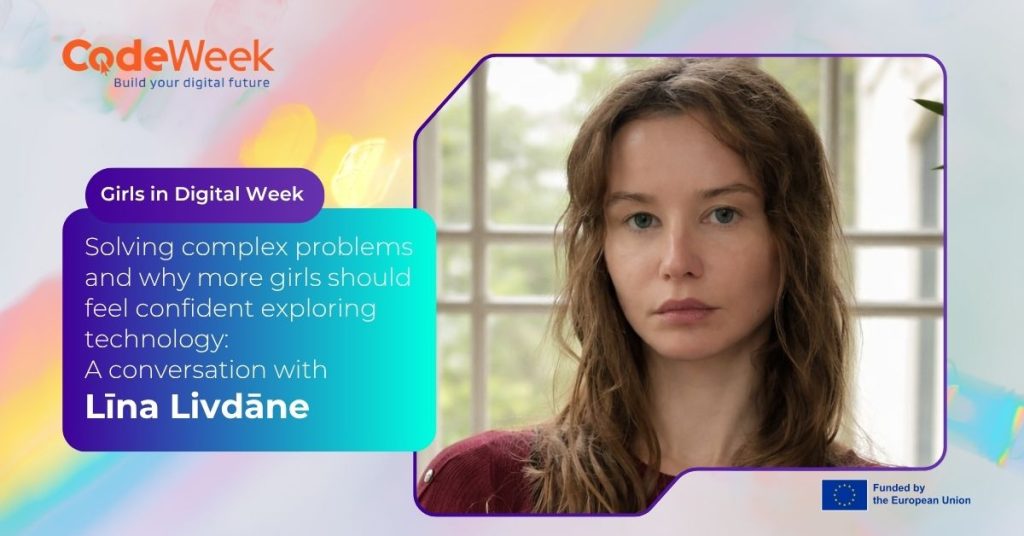
Līna Livdāne on data science, coding and girls in tech
25/03/26
As part of Code Week’s Girls in Digital campaign, we are highlighting women who are shaping the digital world and inspiring the next generation to explore coding and technology.
Līna Livdāne, a data scientist with particular expertise in classification using computer vision and large language models (LLMs), as well as time series modelling, is one such role model.
Her journey shows how curiosity, persistence and problem-solving can open the door to exciting opportunities in the digital field. She shared with us how she discovered coding, and why more girls should feel confident stepping into the world of technology.
How coding became a tool for solving real-world problems
Q: What first sparked your interest in data science, and how did you end up choosing this path?
LL: I studied biology and worked with marine ecosystems, tracking how different species interact in food webs. The datasets were huge and complex, and I quickly realised coding was the best way to make sense of them.
What hooked me was that once you know how to code, you have a tool that works for almost any problem. The same skills I used to understand the ocean now help me work on completely different challenges. It’s a tool you can take anywhere.
Q: For someone hearing the term for the first time, how would you describe what a data scientist actually does?
LL: A data scientist looks for patterns in information and builds tools that make predictions or help with decisions. This could mean analysing fashion trends, spotting unusual patterns that signal fraud, or building systems that help doctors diagnose diseases faster. It’s about understanding what problem you’re trying to solve, then using logic and code to work it out.
Confidence grows through learning and doing
Q: Technology and data fields are still often seen as male-dominated. Did you encounter stereotypes when starting out?
LL: Not really. I focused on my own work and what I could control: learning the skills, solving problems, and building things that worked. That approach kept me productive. If you spend energy worrying about whether you fit someone else’s idea of who belongs in tech, you’re not spending it on getting better at what you do.
Q: If a girl is curious about coding but doesn’t know where to start, what first step would you recommend?
LL: Start with Python. It’s beginner-friendly and widely used. Free online courses can get you started. You can also use AI tools like Claude to help you learn. Ask it to explain concepts, debug your code, or suggest practice problems.
Pick small projects that interest you, maybe analysing data about something you care about or automating a boring task. Practice regularly, even if it’s just 20 minutes a few times a week.
It will feel hard at first. That’s normal, and it doesn’t mean you’re bad at it. When your brain struggles with something new, that’s when you’re actually learning – making new connections and getting stronger.
What surprised me about coding was how good it feels to solve something hard. You get into a flow state, focused entirely on the problem. And in a world full of endless distraction, learning to focus like that is increasingly rare and valuable. Keep going through that initial stage, and it will get easier.
More women in AI means better technology for everyone
Q: Data science and AI are evolving quickly. What excites you most about the future of this field?
LL: The potential is enormous – tools that can tackle climate change, improve healthcare, and make information more accessible at scales we couldn’t before. What excites me is being part of a field where your work can have that kind of impact.
Right now, only about 20% of people working in AI are women, which means there’s a huge opportunity for more voices to shape how these technologies develop. The more diverse perspectives we have, the better these tools will serve everyone.
Q: What message would you like to share with girls across Europe who are considering exploring coding or digital skills?
LL: You don’t need to be a certain type of person to code. If you’re curious and willing to try things, you already have what you need. The field needs people who ask good questions and care about the problems they’re solving. Start small, stay curious, and don’t let anyone convince you this isn’t for you.
Ready to inspire more girls to explore coding and digital skills?
Take part in Girls in Digital through Code Week and help show that technology is for everyone.
