Hosted by Fondazione LINKS (Italian EU Code Week coordinator) inside the Istituto Agnelli in the city, the hackathon turned classrooms and labs into a collaborative design space. Teams tackled real-world challenges connected to how work is changing and how digital skills can support fairer opportunities for all.
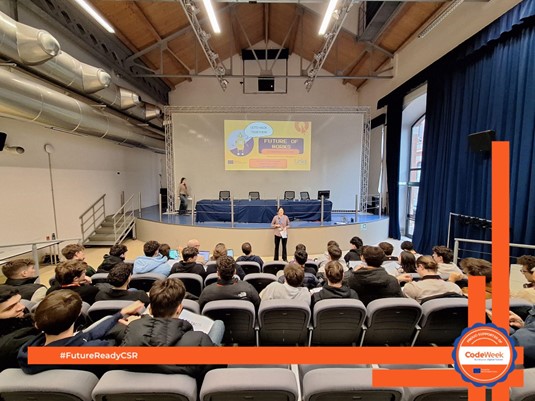
EU Code Week Hackathon Italy 2025/26 – Turin Edition (Turin, 4–5 December 2025).
A format designed for post-school orientation
The Turin hackathon was deliberately structured not only as a competition, but also as an orientation experience that connected school, university, and research:
- Mentors from the Politecnico of Turin: Each team worked side by side with Politecnico di Torino students Leonardo Passafiume and Lucio Baiocchi, who supported them in understanding the challenge, structuring ideas, and transforming concepts into concrete solutions. This peer-to-peer dimension allowed participants to see what studying in a technical university looks like, ask questions, and imagine possible academic paths.
- Challenges linked to the Future of Work: Building on the common European theme, the challenge in Turin focused on how to help young people feel more prepared, aware, and at ease when presenting themselves to the world of work – telling their story, showcasing what they can do and what they want to build in their professional future. Teams were invited to analyse real scenarios and propose solutions that could work in authentic contexts.
- A jury of young researchers from LINKS: The evaluation panel was composed of early-career researchers from Fondazione LINKS, EU Code Week HUB coordinator for Italy. Their feedback combined technical perspective, attention to people, and concrete understanding of labour-market trends. This helped students see how research, innovation, and local impact are connected – and how their own skills can grow in that direction.
Through this structure, the hackathon became a bridge between school and the world after school: students could experiment with roles, tools, and languages typically found in higher education, research, and the workplace, within a supportive environment.
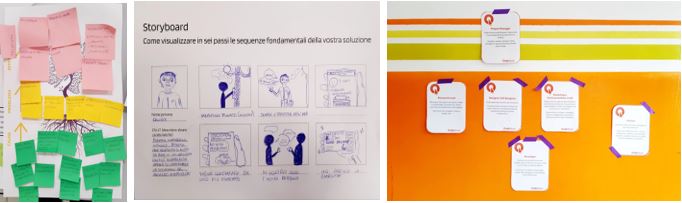
The winning team: FAZE Cucchiaini
At the end of two days of work, pitches, and Q&A with the jury, the team FAZE Cucchiaini was announced as the winner of the Turin edition.
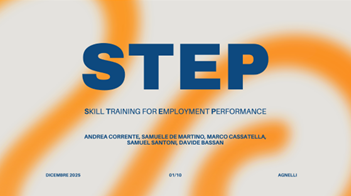
STEP – Skill Training for Employment Performance
Their project STEP – Skill Training for Employment Performance supports young people at a delicate moment in their lives: the transition from school to work. STEP is a web application aimed at recent high-school graduates and university students who are approaching the world of work for the first time.
Its goal is to offer practical support in three key areas: preparing for job interviews, managing emotions and anxiety, and building an effective CV. The platform guides users through a personalised “work pathway”, starting from the sector in which they have applied (or would like to apply) and adapting the content accordingly.
By combining interview simulation, emotional education, and practical tools for CV writing, STEP addresses both the technical and psychological aspects of entering the job market. It helps young people feel better prepared, more informed, and less alone in facing a moment that is often full of expectations and worries.
FAZE Cucchiaini will now represent the Turin hackathon in the next phase of the EU Code Week Hackathon journey, joining other national winners in the European finals.
Celebrating every team
During the hackathon, all teams presented solid and original ideas, capable of reading the real needs of students approaching graduation and imagining concrete solutions to accompany them into the world of work. The projects showed attention to people, creativity in the use of technologies, and a remarkable capacity for collaboration.
For this reason, we wish to thank each group for the commitment, energy, and quality of the work they brought to these two days:
- The Zapps
- P.I.N
- Los Tacos
- Hog Riders
- Megadeath
- FAZE Cucchiaini
The Turin edition confirms how hackathons can be much more than a competition: they can become orientation laboratories, where young people test themselves on real challenges, meet near-peer role models, and start imagining concrete futures in education, research, and work.
Get involved with EU Code Week
Want to run a coding activity, host a hackathon, or bring digital creativity into your classroom or community? Join the EU Code Week movement and help young people build confidence through coding.
