From code to impact: How Code Week in Lithuania is shaping a digital generation
20/03/26
Through the EU Code Week Grants for Grassroots initiative, local communities across Europe are supported in developing activities that promote digital skills, creativity, and inclusion. In Lithuania, this support has contributed to a diverse set of initiatives, from national hackathons to early childhood education, demonstrating how digital learning can create meaningful impact across different age groups and communities.
Developing digital skills today is no longer just about learning technology – it is about the ability to create solutions, think critically, and act responsibly in a digital world. In Lithuania, EU Code Week initiatives show that even small steps can lead to meaningful impact – for young people and for the wider community. These activities in Lithuania are coordinated by the association Langas į ateitį.
From code to solutions: The national hackathon
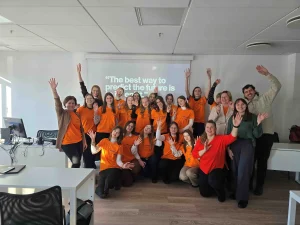
One of the highlights of early 2026 was the national EU Code Week hackathon, which brought together tech-curious students from across Lithuania. Participants were not only coding but also addressing real-world challenges – from education to health and sustainability.
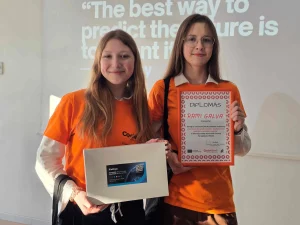
The winning solution, IšmokAI, is a learning application designed to help users better understand topics and prepare more effectively for exams. What made it stand out was not only its technological foundation, but also its strong social impact – the app is accessible to a wide audience and aims to improve learning outcomes.
The hackathon demonstrated that young people are capable of more than just building technology – they can apply it meaningfully to solve real problems, collaborate in teams, and present their ideas with confidence. It also became a space for growth, where participants strengthened not only coding skills, but also critical thinking, creativity, and communication.
Young creators: Educational activities in kindergartens
Another important strand of activity focuses on the youngest learners. Educational sessions in kindergartens show that digital literacy can begin even before formal schooling.
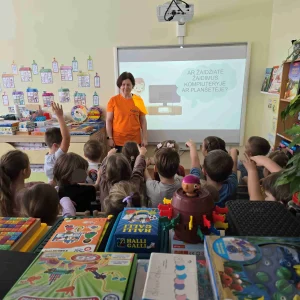
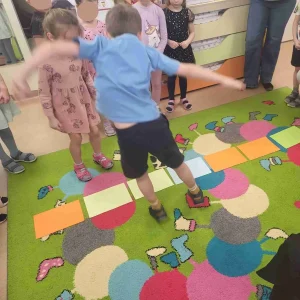
During these sessions, pre-primary children are introduced to safer internet practices – discussing what can go wrong while playing games or watching videos, and who to turn to for help. These topics are combined with unplugged coding activities, where children learn the basics of algorithms through movement – jumping, clapping, and following “code” instructions.
This combination has proven highly effective. Children are engaged, curious, and actively participate, while developing both digital awareness and logical thinking skills. The sessions also introduce the screen time formula (0–1–2–3/4), helping to build healthy technology habits from an early age.
These activities highlight an important insight: digital education does not have to rely on screens – it can be active, creative, and social.
A Community of Educators: Leading Teachers
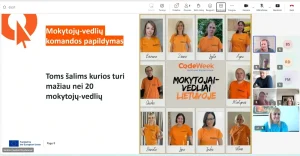
A key part of Code Week in Lithuania is the continuous strengthening of its community. Monthly online mentoring meetings, held on the first wednesday of each month, bring together the national ambassador and a network of Leading Teachers, currently consisting of 11 active members.
These meetings provide a space to share experiences, discuss ongoing activities, exchange ideas, and collaboratively solve challenges. They foster collaboration, peer support, and a shared sense of purpose – all essential for building a sustainable initiative.
Reflecting on this work, it becomes clear that the greatest impact comes not from isolated activities, but from a strong and growing community.
The Future of Digital Literacy in Lithuania
EU Code Week in Lithuania will continue expanding its activities – reaching more schools, teachers, and students, strengthening the community, and promoting meaningful use of technology.
In the near future, the network of Leading Teachers is expected to grow by engaging more motivated educators willing to share their knowledge and inspire others. In addition, a live community meeting is planned for June, providing an opportunity to strengthen connections, exchange ideas, and co-create future initiatives.
The growing Leading Teachers network, innovative solutions created by young people, and early digital education efforts show that we are not only raising technology users, but also conscious creators.
