Anny Tubbs on digital storytelling and girls in tech
26/03/26
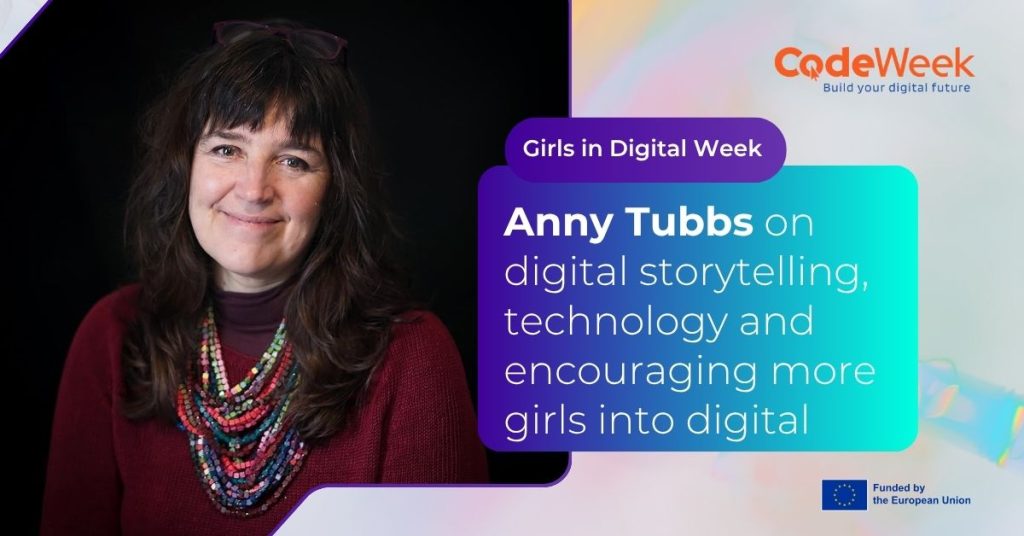
As part of Code Week’s Girls in Digital campaign, we are highlighting women who are helping shape the digital world and encouraging the next generation to explore coding and technology.
Anny Tubbs, Head of Partnerships at Interface3, a Brussels-based tech school for women of all ages, is one such advocate.
A multimedia producer and documentary film director, she works at the intersection of digital media, storytelling and education, supporting initiatives that help women build digital skills and pursue careers in technology.
In this interview, she reflects on her journey from corporate leadership into digital storytelling, the power of technology to connect people and share ideas, and why more girls should feel confident exploring the digital world.

From corporate leadership to digital storytelling
Q: Your career started in law and corporate leadership before moving into multimedia and digital storytelling. What motivated that transition, and how did digital skills become part of your journey?
AT: I started my career in law, spending around 25 years advising international companies on strategy, governance and culture change. As global Chief Business Integrity Officer at Unilever (2015-2019), I learned that real impact depends not only on having strong values, but on turning them into credible action and sharing examples of what works so others can learn from them. I became increasingly interested in the role that effective communication plays in that process.
At the same time, technology was transforming how stories are produced, shared and consumed. So in 2020 I began a full career pivot: I went back to study journalism, media and documentary filmmaking.
I co-founded a production company, began making short documentaries and collaborated on multimedia projects with a news organisation and NGOs. Digital tools became central to that journey, as both content creation and audience reach are deeply connected to the digital ecosystem.
Using digital tools and storytelling to create positive change
Q: You’ve worked on documentaries and multimedia projects that highlight important social and environmental issues. How can digital tools and storytelling help create positive change?
AT: Stories help people understand issues that can be complex and nuanced, while technology allows us to reach wider and more diverse audiences.
In multimedia work, digital tools help us combine video, graphic design and interactive data visualisation to explain topics that might otherwise feel distant or abstract. That can be very powerful when addressing social or environmental challenges.
Knowing how to use these tools for digital storytelling also encourages us to reflect on how to do so responsibly, so we can build trust with our audiences. And digital literacy is equally important for audiences: algorithms influence what people see online and disinformation spreads very quickly.
So by encouraging thoughtful media consumption, audiences are hopefully better able to connect safely with people and share knowledge and goodwill across borders and communities.
Why girls need more visible pathways into digital careers
Q: You are now working with Interface3 and contributing to EU Women in Digital initiatives. From your experience, what barriers still discourage girls from pursuing digital careers, and how can we overcome them?
AT: One of the biggest barriers is still the lack of visible role models to normalise the place of women in tech. Many girls grow up being actively or implicitly discouraged from pursuing STEM and digital careers for a variety of outdated reasons.
In reality, digital skills are used in almost every field today – and indeed sectors such as FemTech are growing rapidly, so there is a place for original thinkers and innovators.
We need to continue addressing all these barriers. Interface3 plays an important role in Brussels by providing high-quality vocational training and real pathways for girls and women into technological and digital professions.
Partnerships with companies keen to nurture a diverse workforce are an important part of making these pathways sustainable. More broadly, we show that technology is not only about coding: it is equally about creativity, collaboration and solving real-world problems.
Start small, stay curious and keep learning
Q: For girls taking part in Code Week who are curious about digital skills but unsure where to begin, what advice would you share with them?
AT: There is no wrong place to start. Digital skills develop step by step, and there will always be something new to learn because everything is evolving so fast. It helps to look beyond the apps we use every day and think about how they actually work.
Understanding the systems behind technology is what turns digital users into digital creators. Just try things out, whether it’s basic coding, multimedia creation or experimenting with AI tools.
And to stay motivated: remember that technology shapes the world we live in. The more diverse the people designing digital tools and platforms, the more likely digital solutions will work well for everyone. We need women of all ages in digital!
Ready to inspire more girls to explore coding and digital skills?
Take part in Girls in Digital through Code Week and help show that technology is for everyone.
